

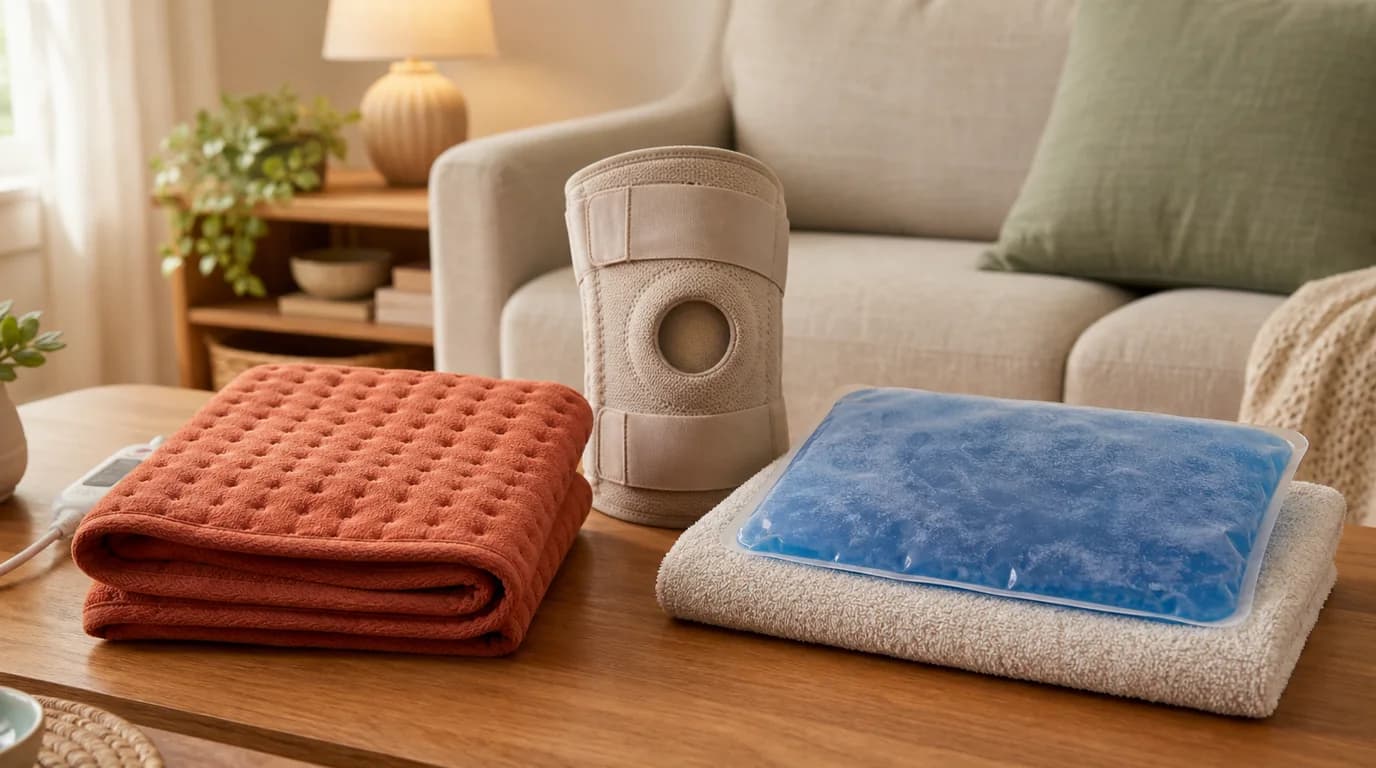
I iced my stiff morning knee for years, convinced I was doing the responsible thing. My physical therapist finally asked: “Is it swollen, or just stiff?”I didn't know there was a difference.
There is, and it flips the advice completely. Here's the one-line rule she gave me, and the five real situations where the simple answer isn't simple anymore.
What this guide settles
- ✓The one-line rule for stiff vs. swollen joints
- ✓Exact timing for both heat and ice
- ✓5 real situations, with the right answer for each
Research summarized in the British Journal of Sports Medicine supports heat for loosening stiff tissue and ice for calming acute swelling, but notes the two are frequently used the wrong way around by patients at home.
The Simple Rule, and Why Everyone Gets It Backwards
Stiff, dull, tight: use heat. Swollen, hot, sharp: use ice. Most people reach for ice out of habit, because it's what athletes use for injuries. But a stiff morning joint isn't an injury. It's low circulation, and ice makes that worse, not better.
Heat: What It Does, When, and How Long
Heat widens blood vessels and brings fresh blood into a stiff joint, which loosens tissue and eases dull aching. Use it on stiff, non-swollen joints for 15 to 20 minutes, warm rather than hot enough to feel uncomfortable.
Ice: What It Does, When, and How Long
Ice narrows blood vessels and slows the inflammatory response, which calms swelling and sharp, hot pain. Use it on a visibly swollen or hot joint for 10 to 15 minutes, always with a cloth between the ice and your skin.
5 Real Situations
The rule in practice, screenshot-friendly.
| Situation | Use |
|---|---|
| Stiff on waking | Heat |
| After a walk (mild ache) | Heat |
| Hot, swollen knee | Ice |
| Night flare (throbbing) | Ice |
| Before exercise | Heat |
Alternating: Why It's Overrated
Alternating heat and ice gets recommended constantly, but for most everyday joint pain, one clear signal (stiff vs. swollen) should decide which one you use, not both in a row. Save alternating for when a physical therapist specifically prescribes it for a particular injury.
When Neither Is the Answer
Heat and ice both manage a symptom, not the source. If your knee hurts every time you bend or squat or your knees crack on specific movements, that's a pattern worth addressing directly, not just icing away.
Managing symptoms is one thing. Knowing what's actually driving your joint pain is another.
Find your joint fix. Free 60-sec quiz →Get the free Anti-Inflammatory Grocery List
Heat and ice manage a flare-up. Food helps prevent the next one. Get the free 1-page grocery list, organized by aisle. No spam, unsubscribe anytime.
The Bottom Line
Stiff means heat. Swollen means ice. That single question settles it most of the time. And if you're reaching for one of them every night, it's worth reading about why your joints stiffen at night in the first place.
What's really behind YOUR joint pain?
Take the free 60-second quiz for a personalized starting point.
Take the free joint quiz →Free · No email required · Results in 60 seconds
Keep reading



Medical disclaimer: This is my personal experience, not medical advice. Talk to a qualified professional before using heat or ice regularly, especially with poor circulation, diabetes, or a recent injury.