


I used to notice one specific pop. First step of the day, right knee, loud enough to wake me up on a quiet morning. I googled it exactly once, saw the word arthritis, and closed the tab. Then I noticed another crack when I stood from the couch, a third going down my stairs, and a fourth when I squatted for a pan. Four different sounds. Four different reasons.
My physical therapist put it simply: "A knee is a hinge with a lid, a cushion, and a strap. It cracks for very different reasons depending on which part gets provoked."Here are the 5 most common triggers after 50, what each one is really telling you, and when it's time to actually pay attention.
What you'll learn:
- ✓The 5 situations that trigger knee cracking after 50
- ✓What each one is telling you (harmless, worth watching, or fix now)
- ✓A 30-second fix for each trigger you can start today
Painless knee crepitus is present in about 40 percent of adults over 50. When there's no pain, no swelling, and no giving way, the research is reassuring: noise alone is not a marker of joint disease. What matters is whether it's painful, repetitive under load, or new after an injury.
The 5 Triggers (Match Yours to the Situation)
Read each one. Notice which situation makes your knee pop the most. That's where you start.
☀️ First Step Out of Bed
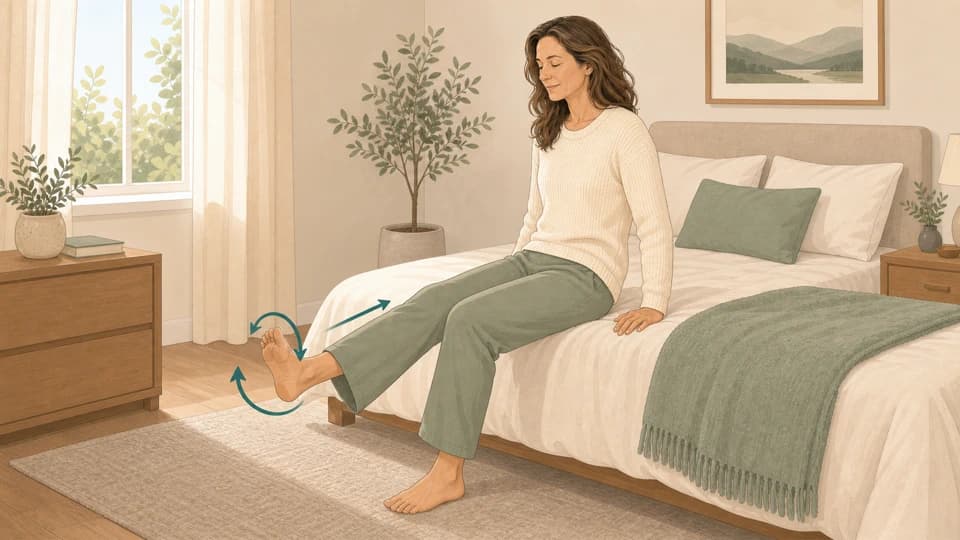
Why: Overnight, synovial fluid inside the knee thickens and settles. The moment you weight the joint for the first time, a gas bubble or two releases with an audible pop. It usually sounds worse than it is. If it does not hurt, it is not damage: it is the joint waking up.
Fix: Do 10 slow ankle circles and 10 seated knee extensions before your feet hit the floor. Warm blood in, gas bubbles dispersed, first step almost silent.
🪑 Standing Up After a Long Sit
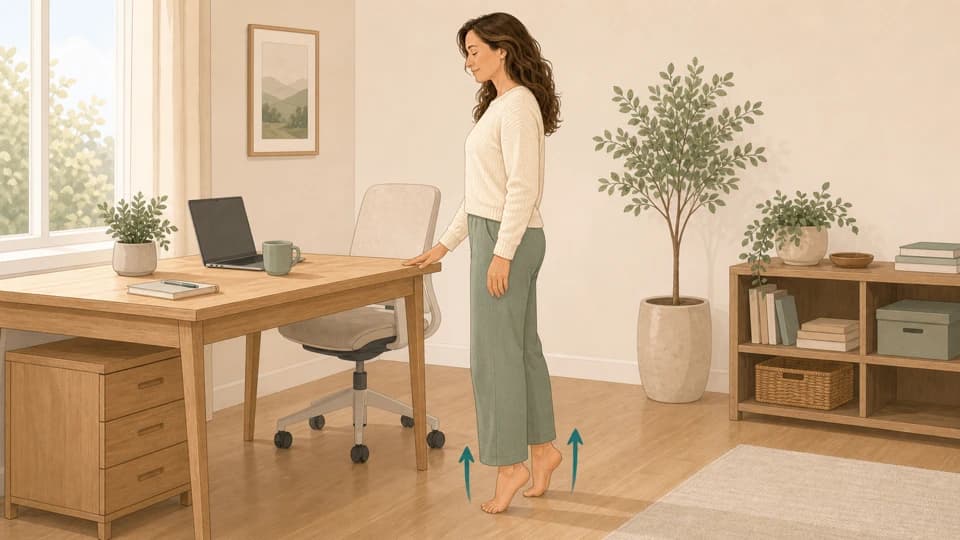
Why: Cartilage is a sponge. Sit for an hour and it loses fluid under gravity. Stand up and the surfaces glide less smoothly, sometimes with a click or a crunch. This one is worth listening to: repeated cracking without any warm-up can nudge the cartilage a little each time.
Fix: Stand up and pump every 45 minutes. Add a quick 30-second walk to the kitchen, or 10 heel raises at your desk. It rehydrates the cartilage before you load it.
⬇️ Going Down Stairs
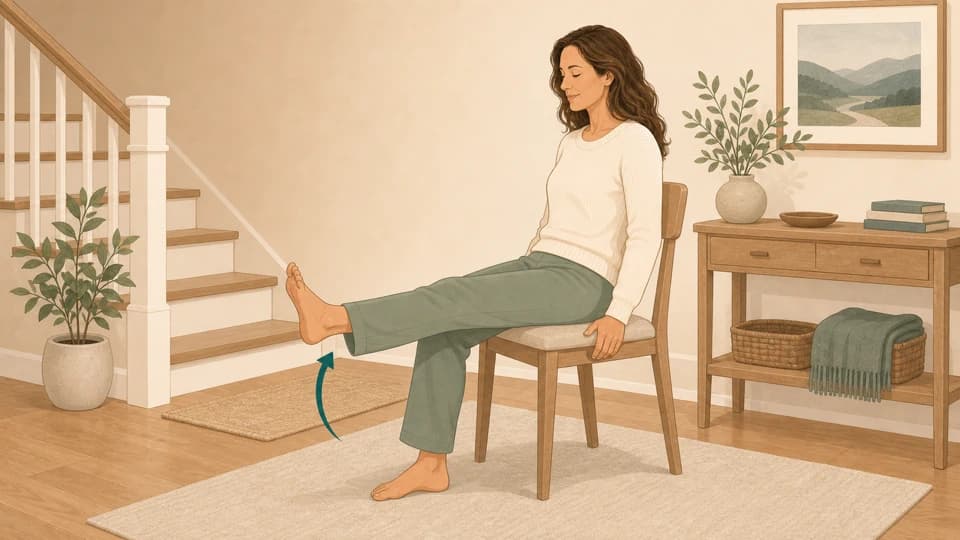
Why: Going downstairs loads the kneecap 3 to 5 times bodyweight. If the small muscles around your knee (especially the inner quad and glutes) are weak, the kneecap tracks slightly off-center and rubs the groove it sits in. That rub is the click.
Fix: Face the same direction, take slightly shorter steps, and let the whole foot land, not just the toes. Two weeks of 3 sets of 10 seated leg extensions (or wall sits) usually calms it down.
🏋️ Squatting or Deep Bending
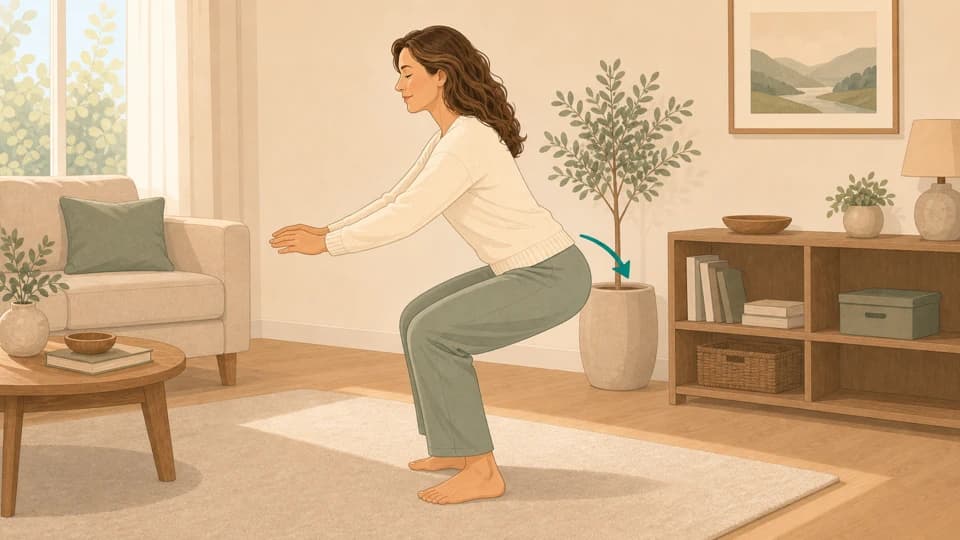
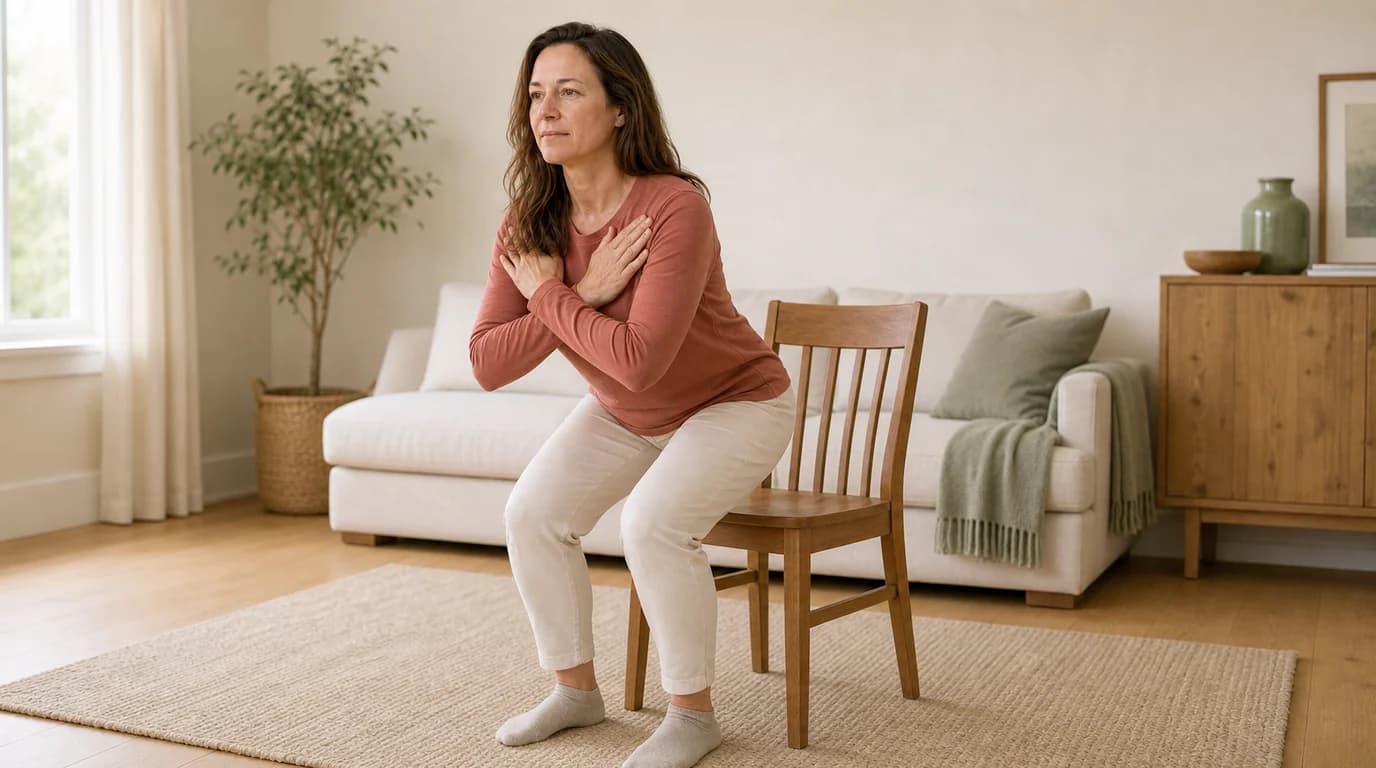
Why: This is the classic gas-bubble pop. Reducing joint volume by bending deeply causes dissolved gas in the synovial fluid to release, like cracking your knuckles. If it happens once, painless, and does not repeat immediately, it is almost always harmless.
Fix: Sit back into the squat (hips first, not knees first), keep your feet flat, and slow the descent. If it hurts on the way up, that is a sign to check quad strength with a PT, not to keep loading it.
🧊 After a Workout as You Cool Down
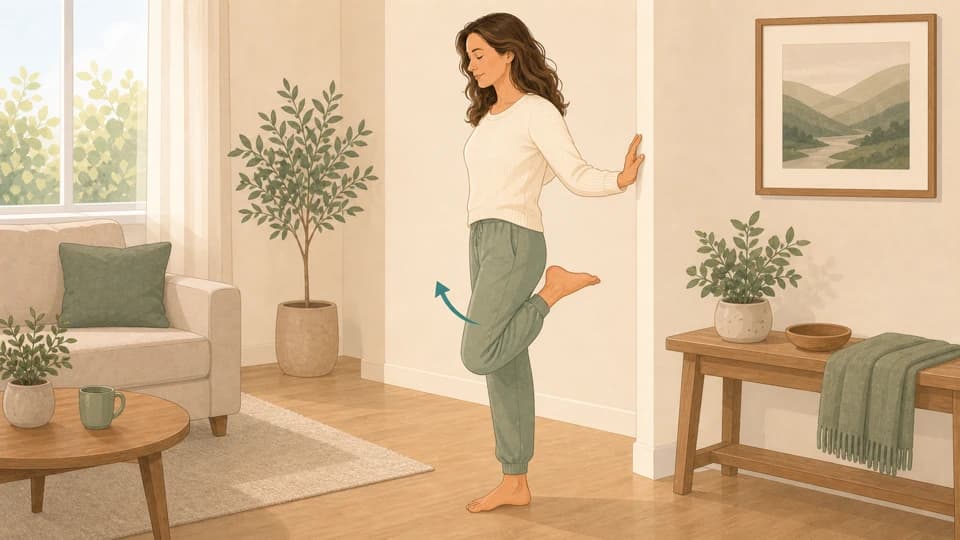
Why: Tendons around the knee (patellar, quad) warm up, get more elastic, then cool and tighten fast once you stop moving. As they tighten across the knee, they can snap slightly over the bone, giving a soft click or a rope-under-a-tarp feeling.
Fix: Add a 5-minute cool-down walk after any workout, then a 30-second quad stretch and 30-second hamstring stretch per leg. Cooling gradually is what stops the sudden snap.
When Cracking Is Actually a Red Flag
Book a physio or a GP visit if any of these show up with the noise:
- •Sharp pain during or right after the crack
- •Visible swelling within 24 hours
- •The knee giving way or locking
- •Cracking that started right after a fall or twist
Which of the 5 triggers is loudest for you? Take the 60-second quiz for a starting fix.
Find your joint fix: free 60-sec quiz →Quiet knees, quieter inflammation
Cracking calms when the joint is well-fed. Get the free 1-page Anti-Inflammatory Grocery List (PDF), joint-friendly foods organized by aisle. No spam, unsubscribe anytime.
The Bottom Line
A knee that cracks after 50 is almost always making noise for a specific mechanical reason. Match yours to the trigger, add the 30-second fix, and give it 2 weeks. Noise fades or stays. If pain shows up with the noise, that's the real signal to get it looked at. Not the sound itself.
Want a fix matched to your specific knee?
Take the 60-second quiz to find where to start.
Take the free joint quiz →Free · No email required · Results in 60 seconds
Keep reading

Medical disclaimer: This is my personal experience, not medical advice. If cracking comes with pain, swelling, or a sense of the joint giving way, check with a qualified professional before starting a new routine.