

The first time it really got my attention, I was loading the dishwasher. I bent down, and my knee answered with a deep, achy pinch that made me grab the counter. Squatting to reach a low cupboard? Same story.
My physical therapist had me bend a few times and watched closely. “Your knee isn't the problem. It's just the part that's shouting,” she said. She pointed to four usual suspects behind bending and squatting pain after 50, and gave me a fix for each.
What you'll walk away with
- ✓The 4 most common reasons bending hurts after 50
- ✓A simple, do-today fix for each one
- ✓When the pinch is normal vs. worth checking
Deep knee bending can push force through the joint at several times your body weight, which is why squatting and stairs hurt long before flat walking does. Research in Osteoarthritis and Cartilage links stronger hip and thigh muscles to noticeably less knee pain.
The 4 Usual Causes (and the Fix)
Most bending pain is a mix of these. Start with the first one. It helps the most people.
🪑 Weak glutes overloading the knee
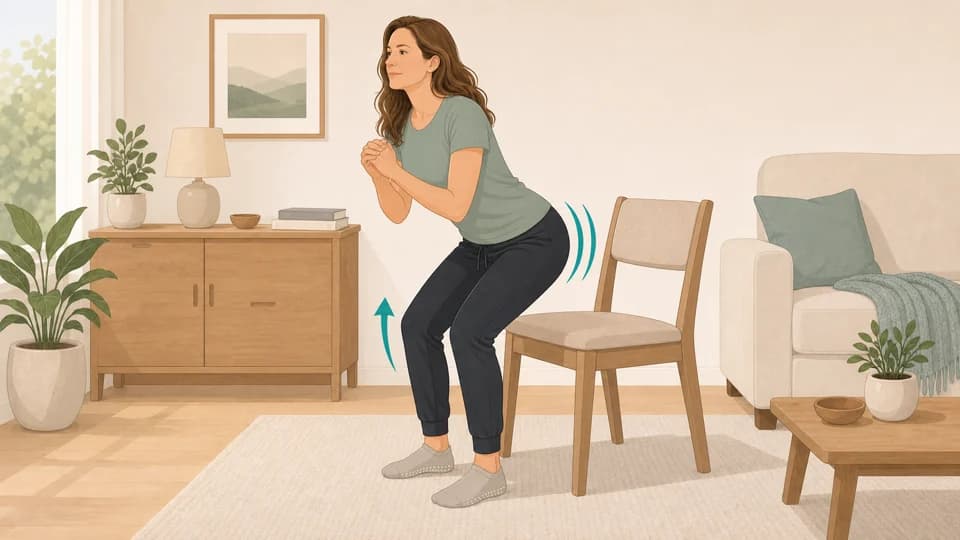
Why: When the hip and glute muscles go quiet after 50, the knee takes over work it was never built for, and bending is where it shows up first.
Fix: Add bridges and sit-to-stands. Squeeze your backside as you rise from a chair; that single cue redistributes load away from the knee.
🧊 Kneecap tracking & cartilage wear
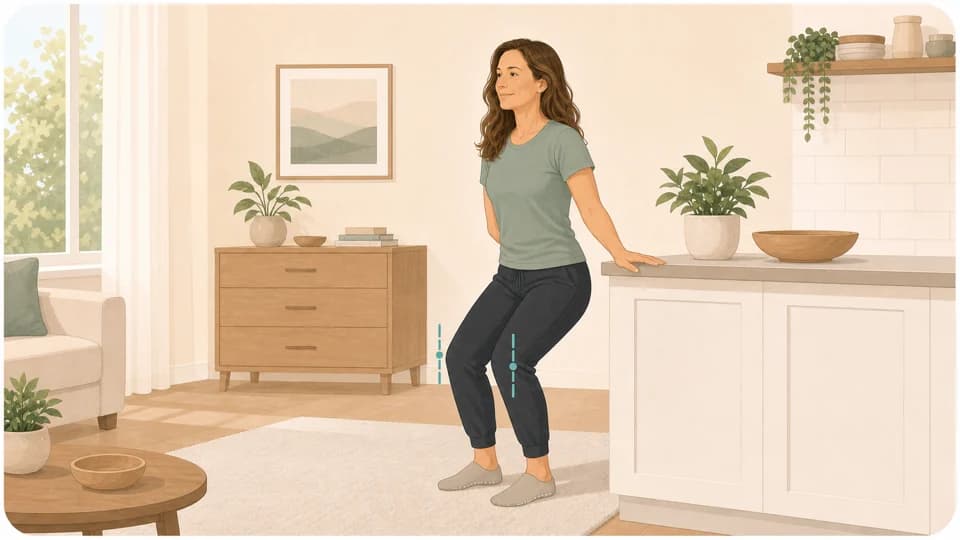
Why: Under the kneecap, cartilage thins with age. Deep bending compresses it, which is why squatting and stairs feel worse than walking.
Fix: Keep bends shallow for now (no deep squats), and strengthen the front-thigh muscle with slow, partial knee bends to improve tracking.
💧 Low-grade inflammation & stiffness
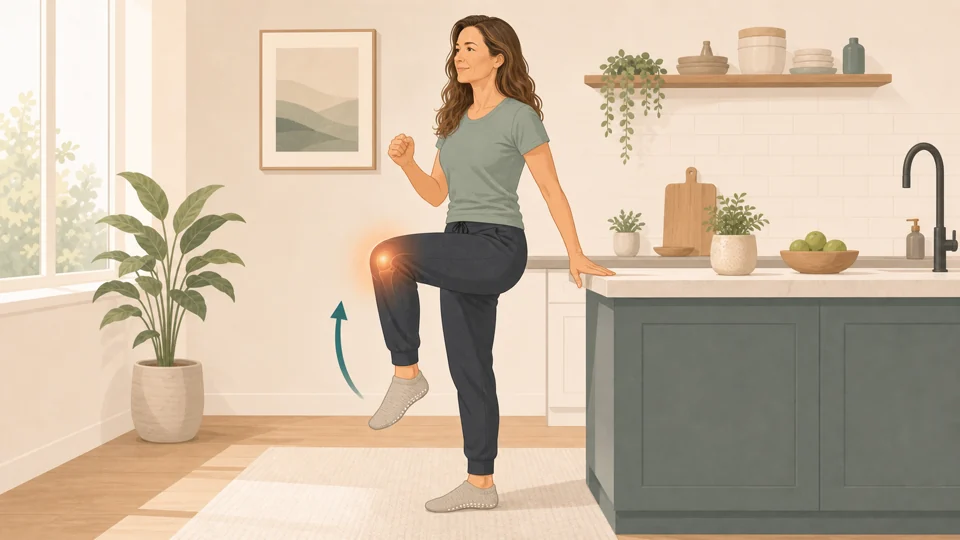
Why: An inflamed joint has less lubricating fluid and a tighter capsule, so the end-range of a bend feels pinched or achy.
Fix: Warm the joint before loading it, a 2-minute march or some knee extensions, and lower everyday inflammatory foods to calm the flare.
📐 Bending from the knee, not the hip
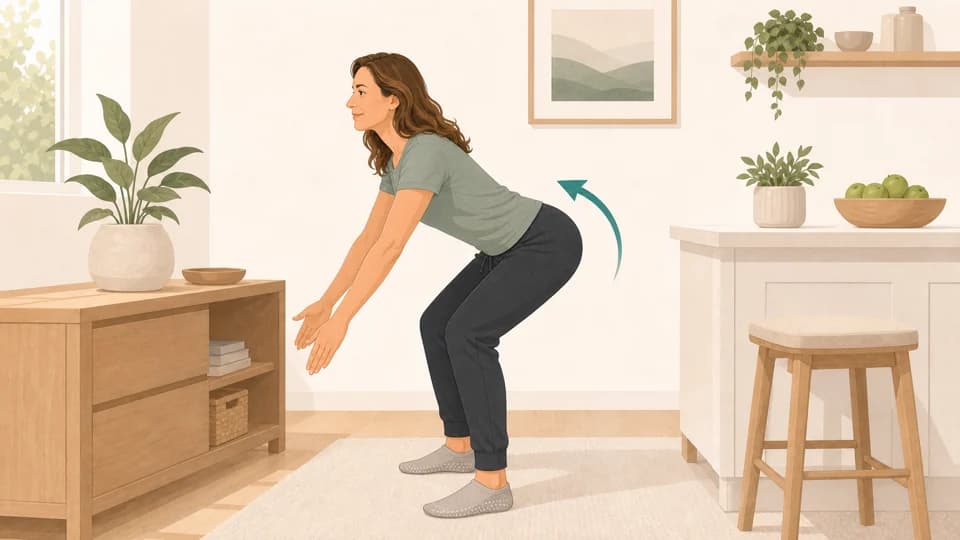
Why: Reaching down knees-first drives your shins forward over your toes and spikes the pressure inside the joint on every squat.
Fix: Hinge at the hips first, push your seat back like reaching for a chair behind you, and keep your weight in your heels.
Not sure which of these is driving YOUR knee pain when you bend?
Find your joint fix. Free 60-sec quiz →Calm the joint from the inside. Free grocery list
Stronger muscles take load off the knee; the right foods lower the inflammation behind that pinch. Get the free 1-page Anti-Inflammatory Grocery List (PDF): joint-friendly foods, organized by aisle. No spam, unsubscribe anytime.
The Bottom Line
Knee pain when you bend or squat usually comes down to weak glutes, cartilage under the kneecap, low-grade inflammation, or bending knees-first instead of hinging at the hips. Strengthen the hips, warm the joint, hinge properly, and keep bends shallow while it settles. A knee that's suddenly hot, locked, or giving way, though, deserves a proper look.
What's really behind YOUR knee pain?
Take the free 60-second quiz. It reads your symptoms and history to give you a personalized starting point.
Take the free joint quiz →Free · No email required · Results in 60 seconds
Keep reading

Medical disclaimer: This is my personal experience, not medical advice. A knee that locks, gives way, or is hot and swollen should be evaluated by a qualified professional.