


At 49, I woke up one week with aching hands, knees and shoulders, all at once. I blamed my workouts until my rheumatologist said, “The timing matters as much as the joint.” My sleep had changed, my periods were erratic, and the pain moved around.
She also warned me not to call every new ache “menopause pain” and stop there. Once I separated the hormone-shaped pattern from an injured or inflamed joint, six practical changes made my mornings far more manageable. None is a miracle. Together, they are useful.
What you will leave with
- ✓A quick check for a menopause-shaped pain pattern
- ✓Six low-friction actions that support sore joints
- ✓Clear signs that deserve a clinician, not another home remedy
A 2026 meta-analysis in The Journal of Bone and Joint Surgery found muscle or joint pain in 57% of perimenopausal women and 59% of postmenopausal women, compared with 40% before menopause. Common does not mean imaginary, and it does not mean every pain has the same cause.
The 6 Things That Actually Helped
Start with the pattern, then build the smallest routine you can repeat.
📝 Track the pattern for two weeks
Why: A moving, whole-body ache that changes with sleep or other menopause symptoms tells a different story from one hot, swollen or injured joint.
How: Note the joint, time of day, stiffness duration, sleep and activity in one phone note. Bring the pattern to your clinician instead of trying to remember a bad month in five minutes.
🚶♀️ Move gently before you stretch hard
Why: Joints often feel less guarded after circulation and easy range of motion. Forcing a cold, painful joint into a deep stretch can make it fight back.
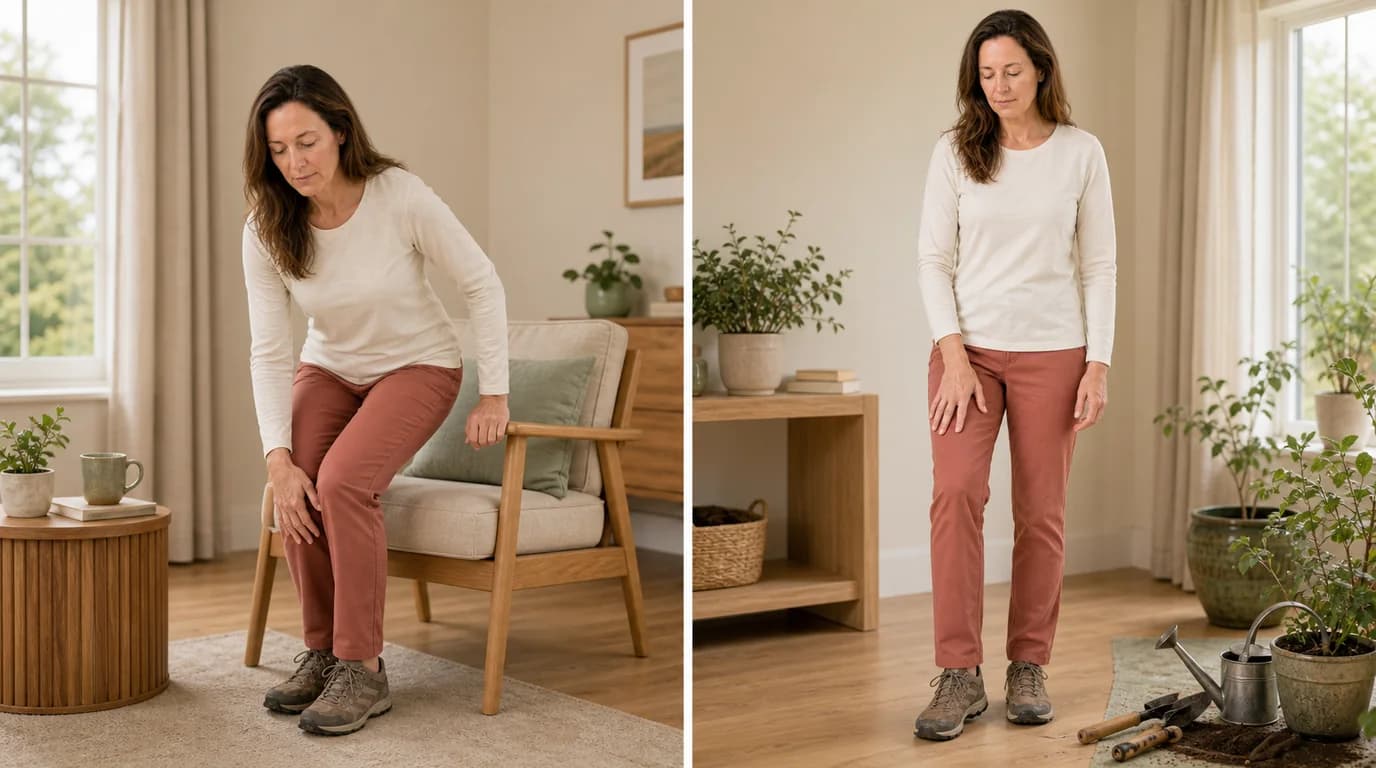
How: Try five minutes of easy walking, ankle circles, shoulder rolls and comfortable knee bends. Keep the motion smooth and stay out of sharp pain.
💪 Rebuild the muscle around the joint
Why: The muscles around your hips, knees and shoulders absorb load. When strength slips, the same stairs, bags and walks ask more from the joint itself.
How: Twice a week, start with sit-to-stands, wall push-ups and a light band row. Two controlled sets are more useful than one punishing workout followed by six days off.
🌙 Treat sleep as part of pain care
Why: A broken night can turn the volume up on pain the next day. That makes a small ache feel bigger and makes movement less appealing.
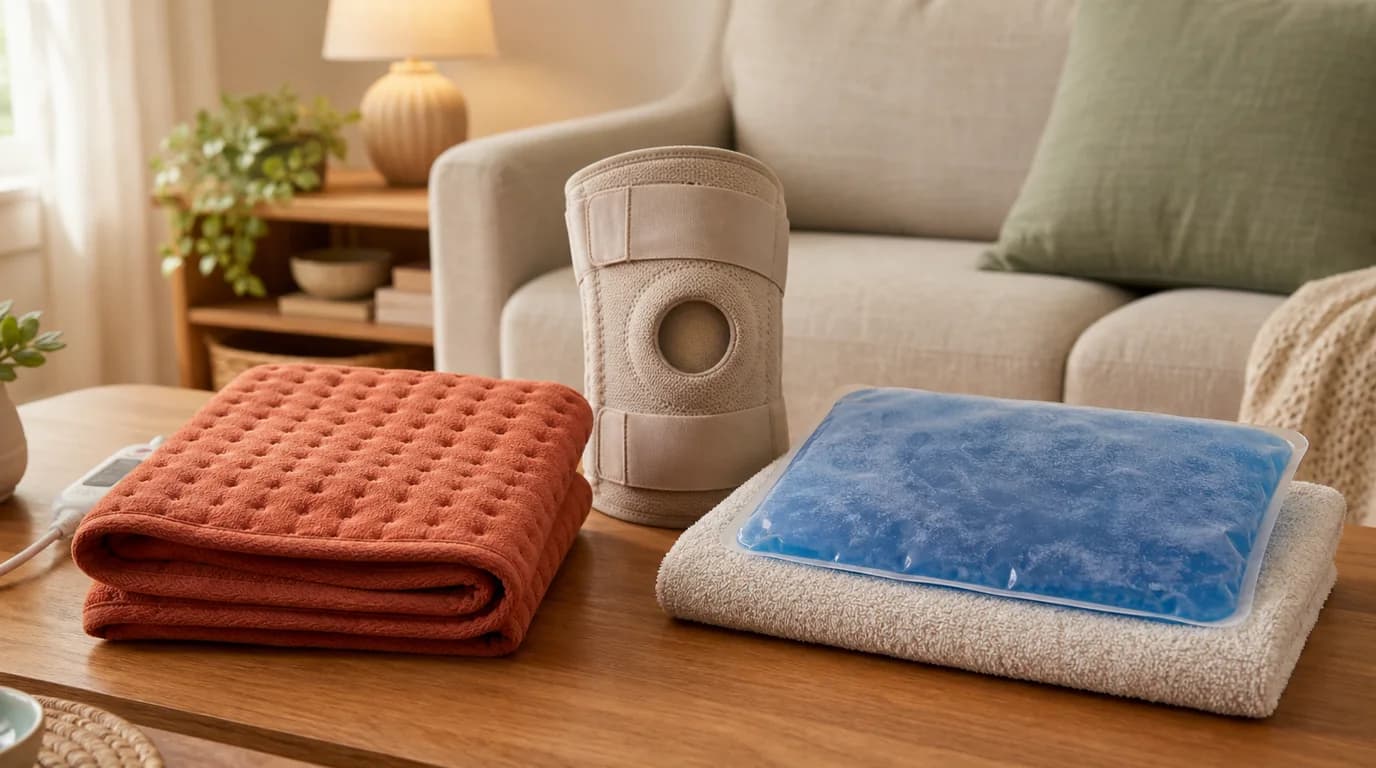
How: Keep a steady wake time, use heat on stiff non-swollen joints before bed, and put a pillow between your knees if side sleeping pulls on your hips.
🥗 Build meals around the boring basics
Why: No single food switches joint pain off, but a repeatable pattern rich in plants, protein and unsaturated fats supports energy, muscle and weight stability.
How: At most meals, pair a protein with colorful produce and olive oil, nuts or seeds. I changed the weekly pattern instead of buying an exotic powder for every symptom.
🩺 Discuss the whole menopause picture
Why: Hormone therapy may help some women with their overall menopause symptoms, but joint pain alone does not tell you whether it is appropriate or safe for you.
How: Ask about your hot flashes, sleep, bleeding pattern, bone health and personal risk factors together. Make the decision with a menopause-informed clinician, not a social-media checklist.
The most important thing I learned was to stop hunting for one perfect menopause fix. A small daily movement habit, two strength sessions and a useful medical conversation did more than my drawer of half-used gadgets.
Do not automatically blame menopause
Get medical advice for a hot or very swollen joint, fever, sudden weakness, pain after an injury, unexplained weight loss, or morning stiffness that regularly lasts well beyond 30 to 60 minutes.
Not sure whether your pattern looks more like stiffness, inflammation or a movement problem?
Find your joint fix. Free 60-sec quiz →Support your joints from the grocery aisle
Get my free 1-page Anti-Inflammatory Grocery List, organized by aisle for easier joint-friendly meals. No spam, unsubscribe anytime.
The Bottom Line
Menopause can be part of the picture without being the whole diagnosis. Track the pattern, move before you push, rebuild strength, protect sleep and take the full story to a qualified clinician. Pick one action today. Mine would be the five-minute walk before the first deep stretch.
What is driving your joint pain right now?
Take the free 60-second quiz for a practical place to start based on your symptoms.
Take the free joint quiz →Free · No email required · Results in 60 seconds
Keep reading

Medical disclaimer: This is my personal experience, not medical advice. Talk to a qualified health professional before changing exercise, medication, supplements or menopause treatment.