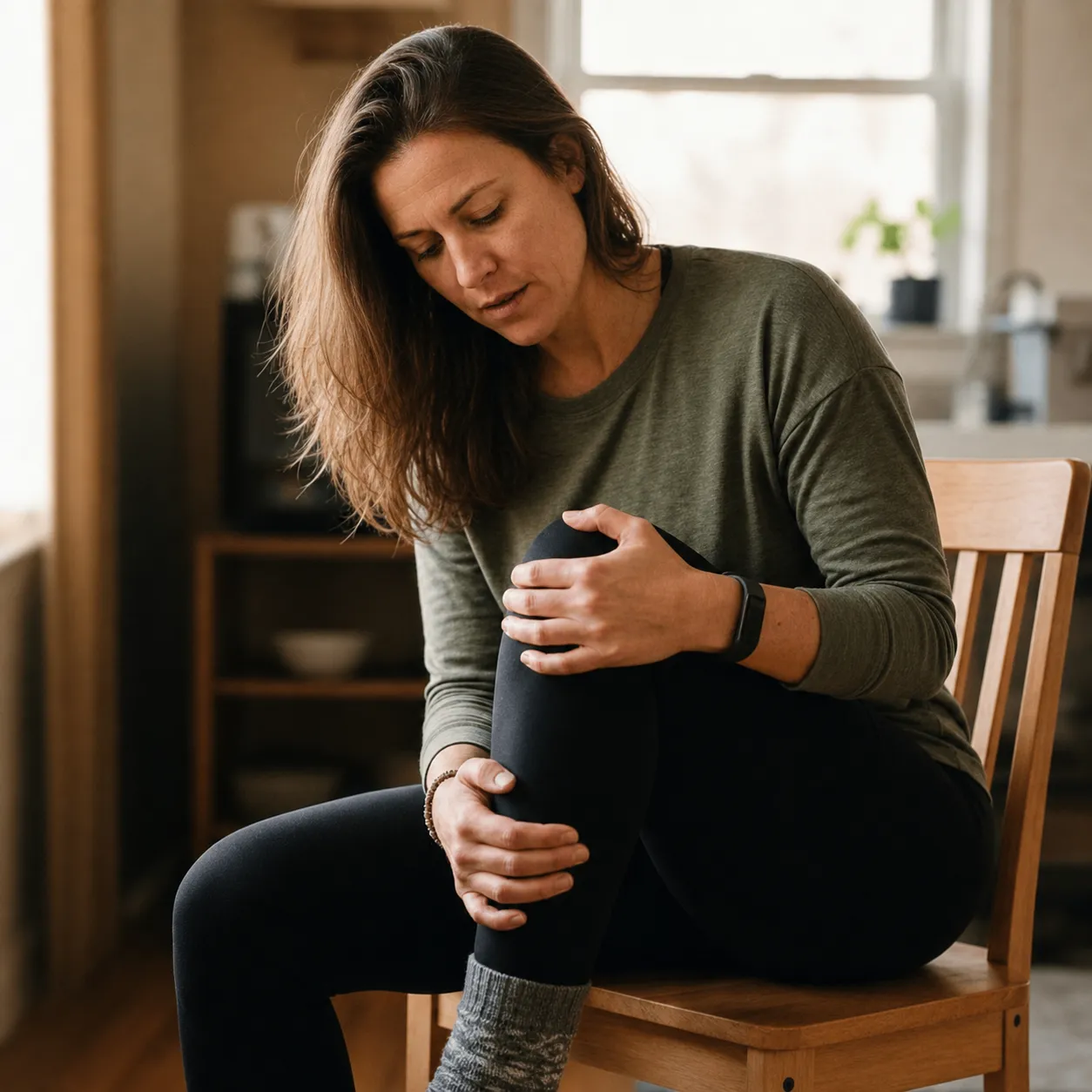
It was 6:14 in the morning. I hadn't even had my coffee yet. I swung my legs over the side of the bed, put my feet on the floor, stood up — and my left knee made a sound loud enough to wake my husband.
I froze. I'm 48 years old. Thoughts raced through my head: Was that cartilage tearing? Is this how arthritis starts? Should I be making an emergency appointment?
I called my PT friend that afternoon. She laughed — not unkindly — and told me that cracking knees in the morning are one of the most common complaints she hears from patients over 40. “It sounds terrifying,” she said, “but in most cases, it's completely harmless.”
In this article, I'll explain exactly what's happening inside your knees when they crack, how to tell if it's normal or a warning sign, and the three-step morning routine that helped me reduce my cracking by over half. I'll also share the one thing I added later that made the biggest difference.
Spoiler: it wasn't what I expected.
You're not alone
Research published in Arthritis Care & Research found that up to 36% of adults over 50 report daily crepitus (joint cracking) — and in most cases, it's a lubrication issue, not a structural one. [1]
Part 1: What's Actually Happening When Your Knees Crack

The medical term for joint cracking is crepitus. It sounds alarming, but the mechanism behind it is surprisingly ordinary.
Your knee joint is surrounded by synovial fluid — a thick, gel-like liquid that lubricates the joint and prevents cartilage surfaces from grinding together. This fluid contains dissolved gases (nitrogen, oxygen, carbon dioxide). When you move the joint quickly after a period of rest, a small pocket of gas can form and collapse in a fraction of a second — creating that audible pop or crack.
This process is called cavitation. It's the same mechanism behind knuckle cracking. Importantly: it's notyour bones rubbing together. It's not cartilage tearing. A 2017 study published in Clinical Rheumatology confirmed that the crack sound in healthy joints originates from gas bubble collapse in the synovial fluid — not from structural damage. [2]
Why mornings specifically?
- →During 7–8 hours of sleep, your knees barely move — synovial fluid becomes thicker and less evenly distributed
- →Tendons and soft tissue cool overnight, becoming temporarily stiffer
- →Your first steps re-distribute the fluid rapidly, causing gas pockets to collapse all at once
- →After 5–10 minutes of movement, the fluid warms and spreads evenly — and the cracking usually stops
Think of it like a suction cup on glass. When you slowly peel it off, it releases with a pop — not because the glass broke, but because the air pressure equalized suddenly. Your knee is doing the same thing.
Part 2: Normal Cracking vs. When to See a Doctor
This is the question I obsessed over for weeks before finally getting clarity. The answer isn't complicated, but it requires being honest with yourself about what you're actually experiencing.
Completely Normal
- •Painless — no discomfort before, during, or after
- •Disappears after 5–10 min of movement
- •Happens in both knees or randomly
- •No swelling or visible change
- •No change in your ability to walk normally
See a Doctor
- •Sharp or throbbing pain after the crack
- •Swelling or warmth around the joint
- •Knee 'locks up' or gives way unexpectedly
- •Constant cracking + pain going up/down stairs
- •Recent fall, impact, or sports injury
“If you have any of the red-flag symptoms above, this article isn't what you need — a doctor's appointment is. But if it's just the noise? The popping with no pain, no swelling, no locking? That's almost certainly what I had. And there's a lot you can do about it.”
— Emma
Part 3: Why It Gets Worse After 50
If you're over 50 and your knees have gotten noisier in the last few years, there's a clear biological reason — and it's not just “getting old.”
Synovial fluid thins with age
The key molecule that keeps synovial fluid thick and effective is hyaluronic acid. Research confirms it declines 10.5% per decade starting in your 30s. Thinner fluid = more gas pockets = more cracking. [1]
Stabilizing muscles weaken if untrained
Your quadriceps and hamstrings act as shock absorbers. When they weaken — which happens naturally after 40 without targeted exercise — the knee joint has slightly more micro-movement with each step. More movement = more opportunity for those gas pockets to form and pop.
Mild chronic dehydration
Synovial fluid is approximately 80% water. Most adults over 50 are mildly dehydrated without knowing it — the thirst mechanism becomes less sensitive with age. Less water intake = thinner synovial fluid = more cracking.
The good news: you can't reverse your age, but you can absolutely improve your joint lubrication and the muscular support around your knees. Here's exactly what I did.
Part 4: The 3-Step Morning Routine That Cut My Cracking in Half
I started this routine after my PT conversation and stayed consistent for 90 days. I'm not going to pretend it eliminated every crack — but it made a very noticeable difference. Here's exactly what I did.
Step 1 — Before your feet hit the floor (2 minutes)
- →While still lying down, slowly bend and straighten each knee 10 times — gently, no forcing
- →Rotate your ankles in circles (10x each direction) to get circulation moving
- →Point and flex your feet 10 times to activate the calf muscles that support knee stability
Why it works: these movements distribute synovial fluid evenly through the joint before you bear weight. The cracking is loudest when fluid is concentrated in one area — this spreads it out.
Step 2 — Water before coffee
A full glass of water (300–400ml) immediately upon waking — before coffee, before checking your phone. Your body is at its most dehydrated first thing in the morning after 7–8 hours without fluids. Since synovial fluid is 80% water, rehydrating early directly supports joint lubrication throughout the day. Target 2L total per day.
Step 3 — 10 minutes of knee-strengthening exercises (3x/week)
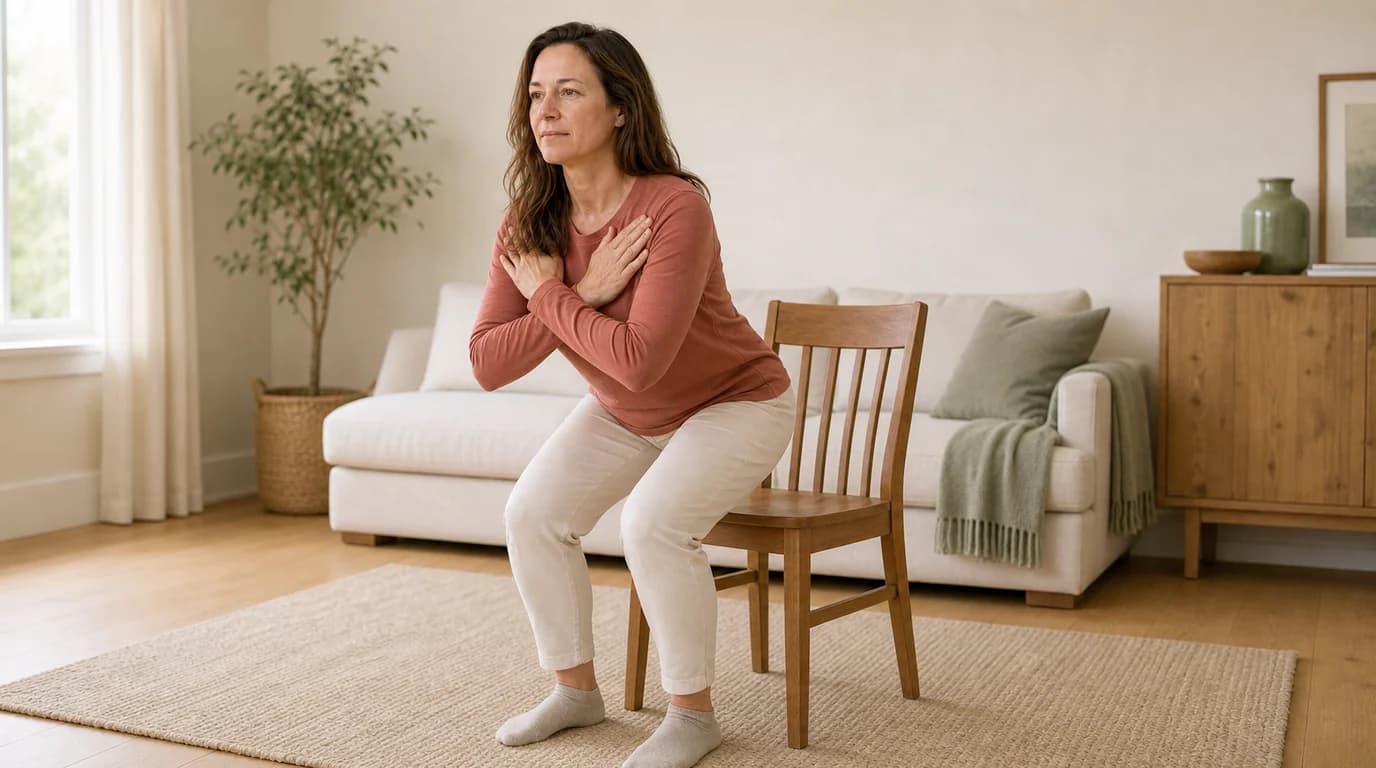
My PT gave me three exercises specifically designed to strengthen the muscles that stabilize the knee without stressing the joint itself. I've written about them in detail in a separate article here. The key moves: wall sits, seated leg extensions, and glute bridges.
Why it works: stronger quads and hamstrings reduce micro-movement in the knee joint with each step. Less movement = fewer gas pockets = less cracking.
“After three months, I'd estimate my morning cracking dropped by 60–70%. The first steps of the day were quieter, less dramatic. But I still had some residual stiffness and occasional grinding on stairs. I felt like something was still missing — the inside-out lubrication that no exercise alone can provide.”
— Emma
🧪 Not sure if your cracking is normal or something more?
I built a free 60-second quiz that looks at your age, symptoms, and activity level to help you identify what type of joint support might make sense for your specific situation.
Take the free knee assessment →Free · No email required · Results in 60 seconds
Part 5: The Missing Piece — Targeted Botanical Support
The routine above addresses the mechanical side of cracking — warming the fluid, building supportive muscle, staying hydrated. But at 48, lifestyle changes alone weren't enough. The underlying inflammatory environment in my joints, and the gradual breakdown of connective tissue, needed something more targeted.
After a lot of research, I found Performance Lab® Flex — a 100% vegan, clean-label formula that specifically stacks the botanical compounds with the strongest clinical evidence for joint comfort. No generic glucosamine powder, no fillers. The key difference is the quality of individual ingredients.
What's inside Performance Lab® Flex
- 🌿ApresFlex® Boswellia Serrata — blocks the leukotrienes that drive chronic joint inflammation and the "alarm signal" loop that makes cracking worse
- 🟡CurcuWIN® Turmeric — 46x more bioavailable than standard curcumin extract, delivered at doses that actually reach the joint space
- 🔗OptiMSM® — structural sulfur for maintaining the collagen and connective tissue proteins that stabilize the joint and reduce micro-movement
- 🧬Glucosamine Sulfate + Phytodroitin™ — joint matrix support for cartilage cushioning and synovial fluid health
I started taking it alongside my morning routine. After about 6 weeks, the morning crack was less loud and less frequent. The grinding sensation on stairs had mostly disappeared. I wasn't bracing for that sound every morning anymore.
I want to be honest: I'm not a doctor, and results will vary. But the combination of the routine AND targeted supplementation gave me noticeably more improvement than either one alone.

If you want to check out what I take:
Individual results vary. Not medical advice.
✓ Vegan · Clean label · Subscribe & save 25%
The Bottom Line
If your knees crack every morning, you're in very good company. For most people over 50, it's a sign of thinner synovial fluid and stiffer soft tissue — not arthritis, not bone damage, not an emergency. It's your joints asking for attention.
The three-level approach that worked for me: Movement (warm the fluid before bearing weight), Hydration (synovial fluid is mostly water), and Internal lubrication support (Mobilee® to address the hyaluronic acid decline directly).
And the most important thing my PT told me: don't let the fear of the crack stop you from moving. Staying still makes it worse. Movement, done correctly, is what makes it better.
Related reading: The 3 knee exercises my physical therapist swears by · Anti-inflammatory breakfast for joint health
Every knee is different. What's the right approach for yours?
Take the free 60-second quiz to find out whether your cracking is normal, what may be causing it, and which combination of solutions fits your specific situation.
Take the free 60-sec knee assessment →Free · No email required · Results in 60 seconds
P.S.If you've already done the quiz and want to go straight to Joint Genesis™, use this link to access the current offer with the 180-day empty bottle guarantee. Individual results vary.
Frequently Asked Questions
Is knee cracking a sign of arthritis?
Not on its own. Painless cracking is almost always caused by gas bubble collapse in the synovial fluid (cavitation), not joint damage. Arthritis is typically accompanied by persistent pain, swelling, and stiffness that doesn't improve with movement. If you have cracking with no pain and no swelling, it's very unlikely to be arthritis.
Why do my knees crack more in the morning than in the evening?
Overnight, your joints are still and your synovial fluid thickens and pools. When you take your first steps, the fluid redistributes rapidly — causing gas pockets to collapse and produce the cracking sound. By evening, after hours of movement, the fluid is warm and evenly distributed, so there's less opportunity for gas bubbles to form.
Can cracking knees be stopped completely?
In many cases, significantly reduced — but not always eliminated entirely. The most effective approaches are: warming up joints before bearing weight, staying well hydrated, strengthening the muscles around the knee, and supporting synovial fluid production with targeted supplementation.
Should I stop exercising if my knees crack?
No — the opposite is usually true. Painless cracking is not a reason to rest. Inactivity weakens the muscles that support the knee and allows the synovial fluid to stagnate, which can actually worsen the cracking. Low-impact movement (walking, cycling, swimming) and targeted strengthening exercises are recommended.
What vitamin deficiency causes knee cracking?
Vitamin D and magnesium deficiencies are commonly linked to increased joint discomfort and reduced muscle function around the knee. Vitamin C is essential for collagen synthesis. While no single deficiency “causes” cracking, low levels of these nutrients can contribute to the underlying factors (thinner synovial fluid, weaker stabilizing muscles) that make cracking worse.
Is it bad to crack your knees on purpose?
Current evidence suggests occasional intentional cracking is not harmful. A long-term study famously followed a physician who cracked the knuckles of only one hand for 60 years — and found no difference in arthritis between his hands. However, forceful or aggressive cracking applied to an already painful or swollen joint is never recommended.
Scientific References
- Kerstan M et al. “Prevalence and clinical significance of crepitus in adults aged 50 and over.” Arthritis Care & Research, 2020.
- Kim HR et al. “Crepitus and its association with synovial fluid composition and joint mechanics.” Clinical Rheumatology, 2017.
- Martinez-Puig D et al. “Efficacy of oral administration of a preparation containing hyaluronic acid (Mobilee™) in adults with mild joint discomfort.” Journal of the International Society of Sports Nutrition, 2013.
- Palmieri-Smith RM et al. “Quadriceps inhibition induced by an experimental knee joint effusion.” Journal of Orthopaedic & Sports Physical Therapy, 2009.
Medical Disclaimer: This article is for informational purposes only and does not constitute medical advice. It is not intended to diagnose, treat, cure, or prevent any disease. Always consult a qualified healthcare professional before starting any supplement program.