

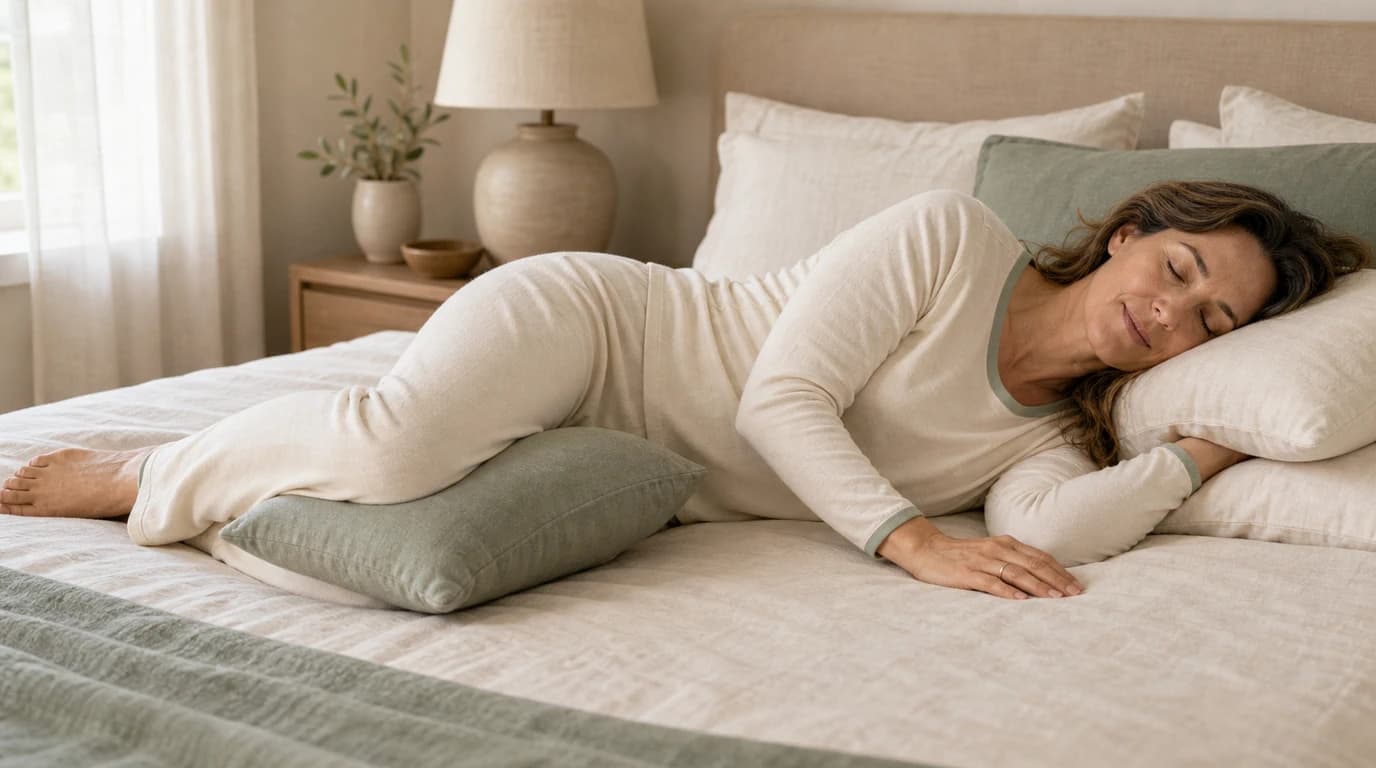
For about a year, my hip only hurt at one specific time: the second I rolled onto my side in bed. Fine all day. Fine on my walks. Then a sharp ache at 2 a.m. that had me rearranging pillows in the dark. I was sure it was arthritis moving in.
My physical therapist listened, then asked one question. "Where exactly does it hurt: the bony point on the outside, the deep front, or the low back?" Turns out "hip pain in bed" is almost never one thing. It's 4 different tissues that get provoked by 4 different sleep positions. Once you know which one is yours, the fix is small and cheap.
What you'll learn:
- ✓The 4 most common causes of hip pain during sleep after 50
- ✓Which sleep position triggers each one (side, curled, back)
- ✓One position tweak per cause, using pillows you already own
One study from the Journal of Orthopaedic & Sports Physical Therapy reported that around 1 in 4 adults over 50 wake at least once a week with hip pain, and the vast majority of those cases were mechanical (position, soft tissue) rather than joint disease. Small position changes are usually the highest-leverage fix.
The 4 Common Causes (Match Yours to the Spot)
Read each one and notice which description matches your pain most closely. That's almost always the tissue to start with.
🔥 Trochanteric Bursitis (Outer Hip)
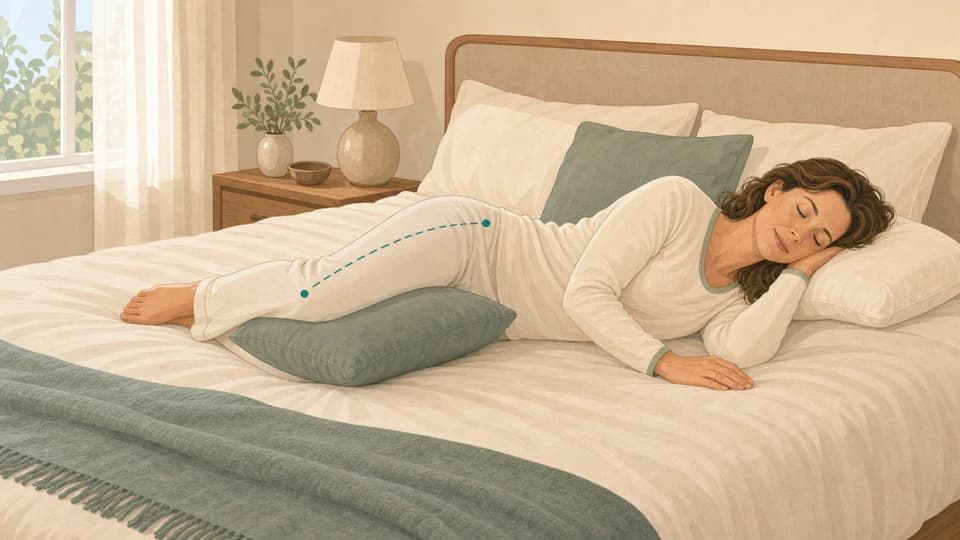
Why: The bony point on the outside of your hip sits on a small fluid sac called the bursa. After 50, it gets thinner and more reactive. When you sleep on that side, your bodyweight compresses the bursa against the mattress for hours, and it flares. The pain is sharp on the outer hip, right where you rest on the mattress.
Fix: Put a firm pillow between your knees so your top hip stops dropping inward. Add a soft mattress topper if your bed is on the firmer side. Try 3 to 5 nights on the less painful side while the flare calms down.
🎯 IT Band Tension (Outer Thigh Line)
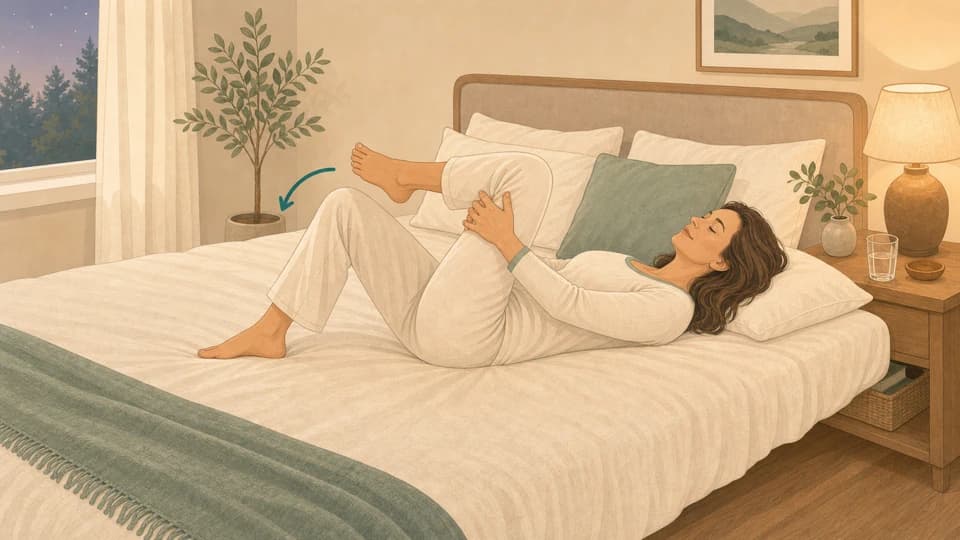
Why: The IT band is a thick strap of connective tissue running from the outer hip down to the knee. Sit all day, then sleep on your side with the top leg dropped forward, and it stays tight all night. You wake up with a deep ache down the outer hip and thigh.
Fix: Do a slow figure-4 stretch (30 seconds per side) before bed. In sleep, keep that pillow between your knees so the top leg stays stacked over the bottom one instead of pulling the IT band across.
🦵 Hip Flexor Tightness (Front of Hip)
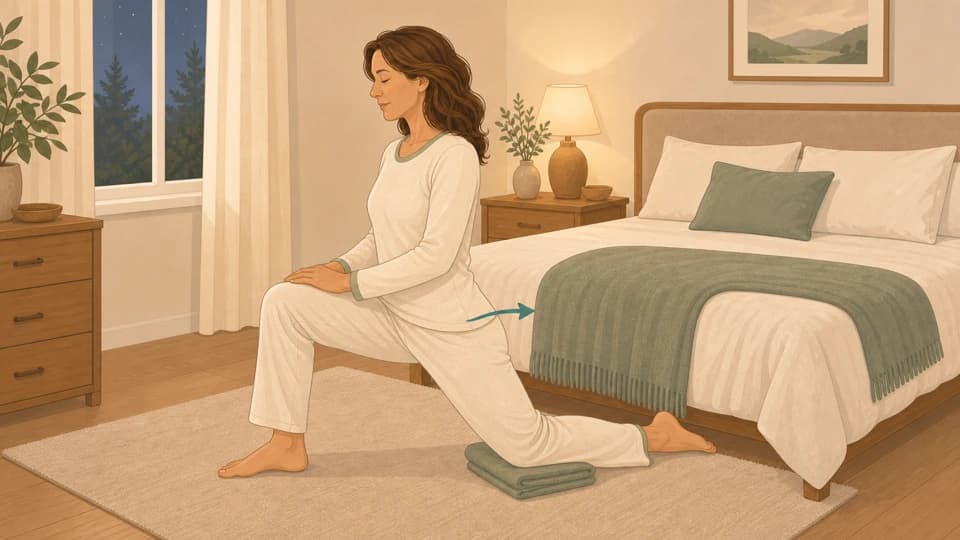
Why: The hip flexors are the muscles at the front of the hip that lift your leg toward your chest. Sit all day and they stay short. Sleep curled in a fetal position and they never get to lengthen. The result: a gripping ache at the front of the hip in the morning and a slow first few steps.
Fix: Sleep straighter: think 'S' shape, not tight 'C.' Before bed, do 30 seconds of a half-kneeling hip flexor stretch on each side, or a knee-to-chest hug lying flat. It signals the muscle to release before you curl up again.
🌀 SI Joint Irritation (Back of Hip)
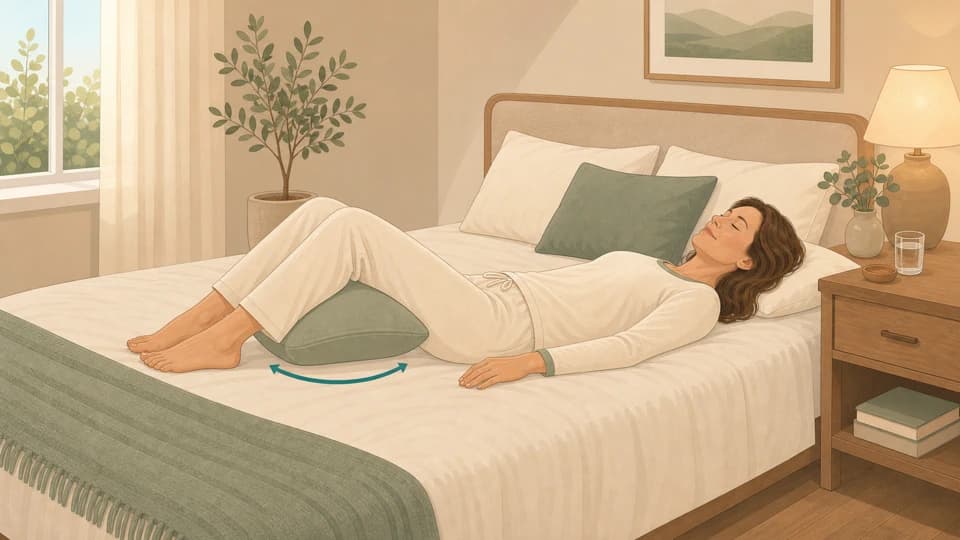
Why: The SI joint sits at the back of your pelvis where the sacrum meets the ilium. When you sleep flat on your back with legs stretched long, the lumbar spine arches and pulls on that joint all night. The pain shows up as a deep ache low in the back or on one side of the pelvis, worse first thing in the morning.
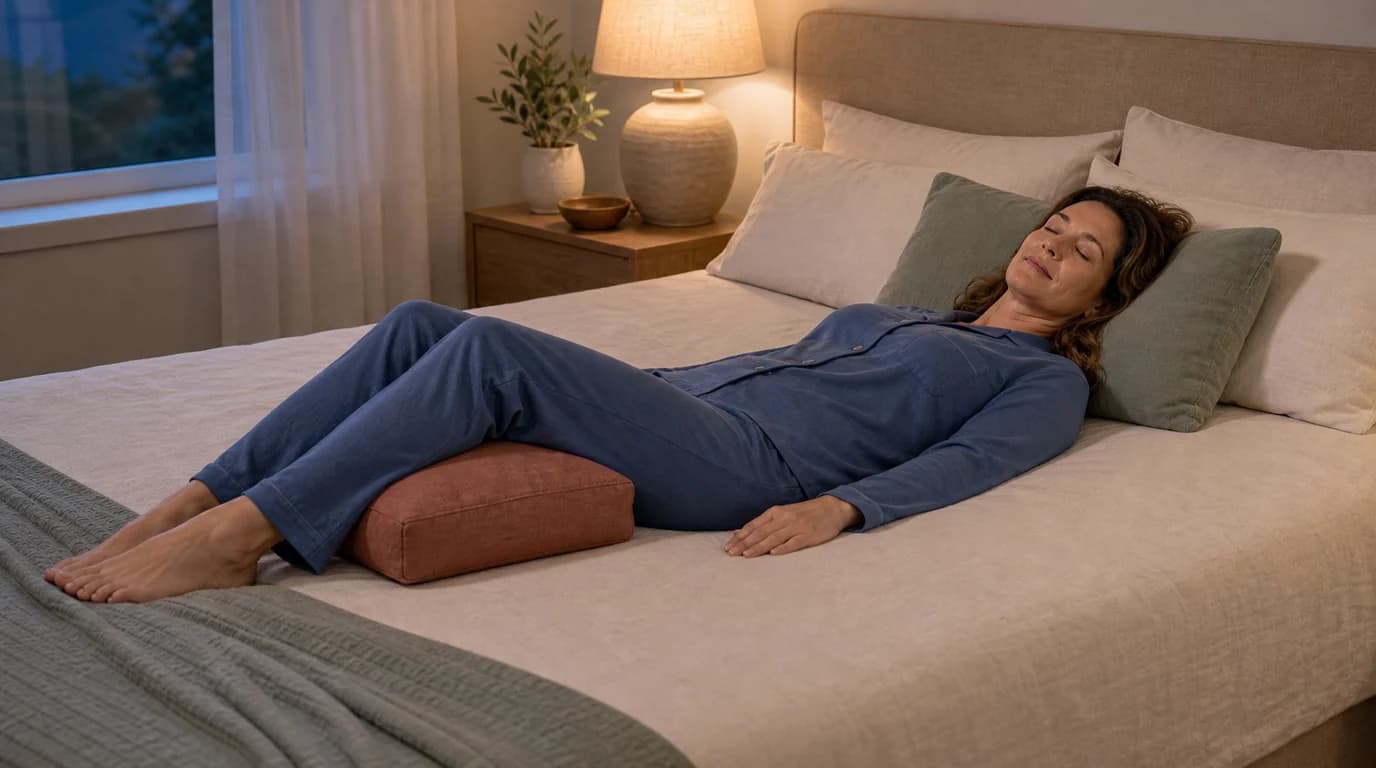
Fix: Put a small pillow or rolled towel under your knees when back-sleeping. It flattens the lower back and takes the pull off the SI joint. Add a gentle knee-to-chest stretch (both knees, 20 seconds) before lights off.
Not sure which of the 4 causes matches your hip? Take the 60-second quiz and get a starting fix.
Find your joint fix: free 60-sec quiz →Calm the hip at night, calm the inflammation by day
Position fixes ease the mechanical part. The inflammation part responds to what you eat. Get the free 1-page Anti-Inflammatory Grocery List (PDF), joint-friendly foods organized by aisle. No spam, unsubscribe anytime.
The Bottom Line
Hip pain in bed after 50 is almost always about which tissue gets compressed by your sleep position for hours. Match the pain to one of the 4 spots, add the small position tweak, and give it 5 to 7 nights. If it doesn't change at all, book a physio visit. That's when it's worth investigating further.
Not sure which hip cause matches your pain?
Take the 60-second quiz to find your best starting fix.
Take the free joint quiz →Free · No email required · Results in 60 seconds
Keep reading


Medical disclaimer: This is my personal experience, not medical advice. Sharp night hip pain that lasts more than a couple of weeks, or wakes you every night, deserves a check with a qualified professional before starting a new routine.