

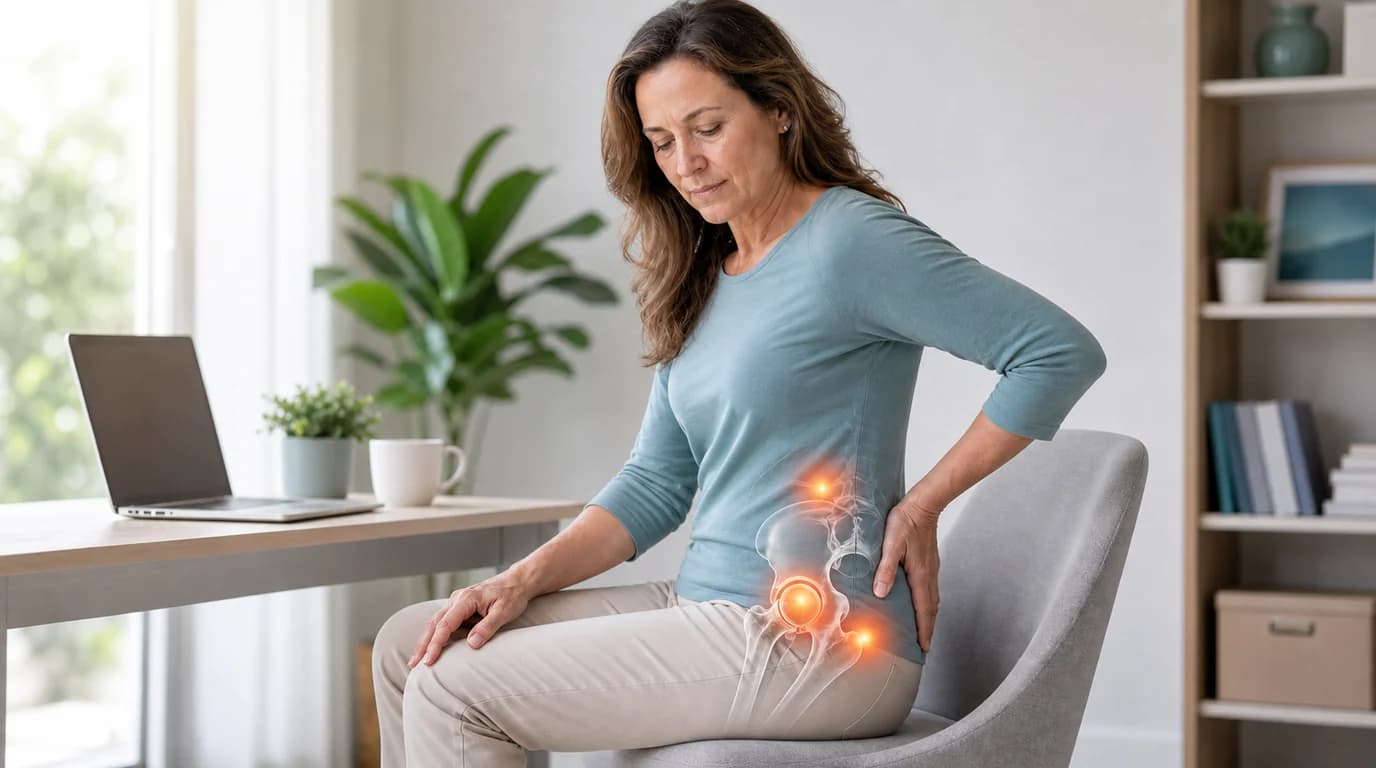
It crept up on me at my desk. I'd stand after an hour of work and my hip would catch: a pinch at the front, then a deep ache that took a few steps to walk off. By evening, after a movie on the couch, getting up felt like my hip had rusted shut. I assumed it was just my age and braced for it to get worse.
Then my physical therapist asked me one question that reframed everything: "Where exactly does it hurt: the front, the deep middle, or the outside?" Turns out "hip pain when sitting" isn't one problem. It's usually one of three, and each has a different, simple fix. Here's how to tell which one is yours.
What this guide gives you:
- ✓How to pinpoint your hip pain by where it sits: front, deep, or outer
- ✓The specific reset for each spot (none take more than 20 seconds)
- ✓Why sitting makes it worse, and the one habit that helps most
Here's what my PT pointed out: cartilage has no blood supply of its own: it's fed by movement, which pumps nutrient-rich fluid in and out of the joint like a sponge. Sit still for hours and the "sponge" dries out, which is exactly why your hip feels worst right after you've been sitting.
The 3 Spots: Where It Hurts Tells You Why
Press gently and notice where the pain actually lives. Then match it below.
🦵 The front (hip flexor)
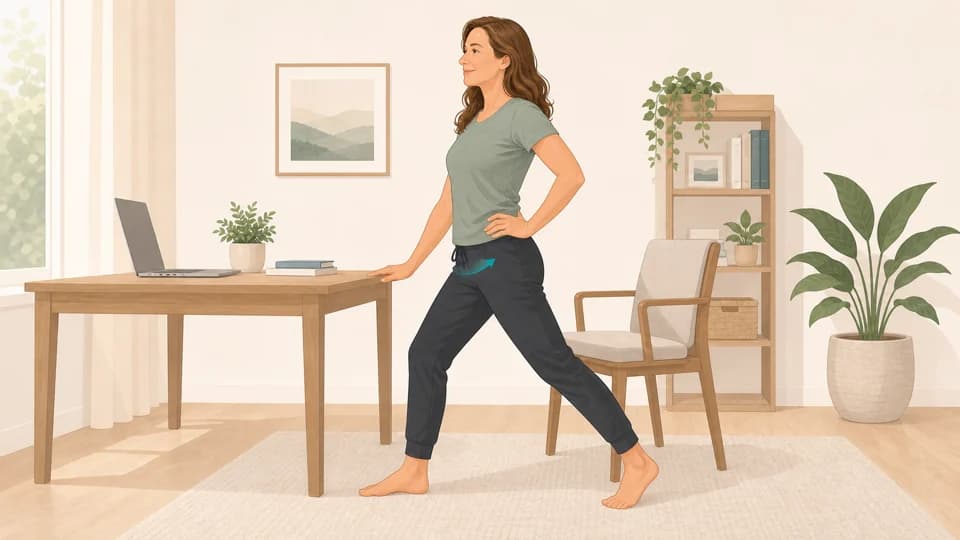
Why it hurts: Sitting keeps the hip flexor, the muscle at the front of the hip, in a shortened position for hours. When you stand, it pulls and pinches at the front crease of the hip. After 50 it tightens faster because we move less and sit more.
The fix: Stand up and do a gentle standing hip stretch every 45 minutes: step one foot back, tuck your tailbone, feel the front of the back hip lengthen. 20 seconds each side resets the pull.
🎯 The deep, achy middle (joint capsule)
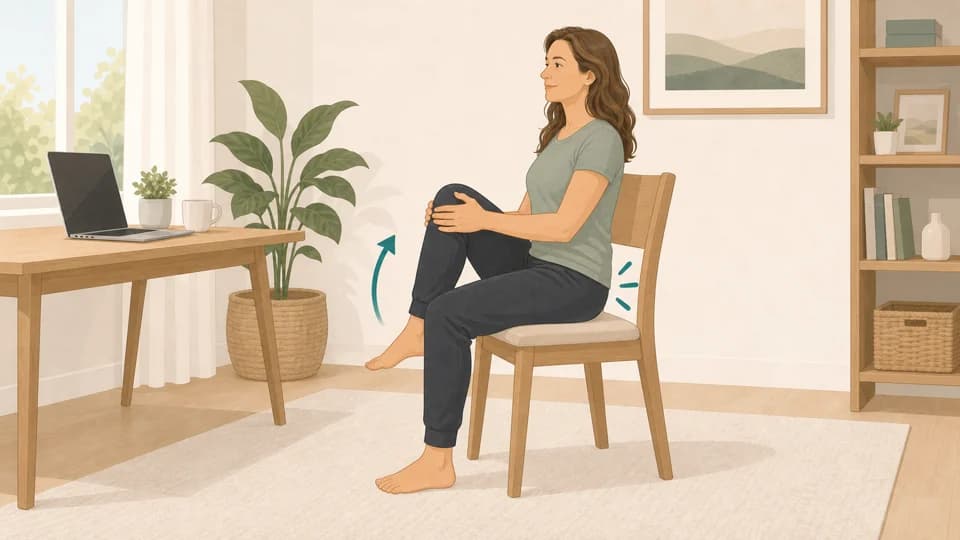
Why it hurts: A dull ache deep in the hip or groin that's worse after long sitting usually points to the joint itself: the cartilage and capsule getting stiff from lack of movement. Cartilage has no blood supply; it's fed by motion, so stillness literally starves it.
The fix: Gentle, frequent range-of-motion beats one big workout. Seated marching, slow knee-to-chest, and standing hip circles pump fluid back through the joint. Little and often is the rule.
🍑 The outer hip / glute
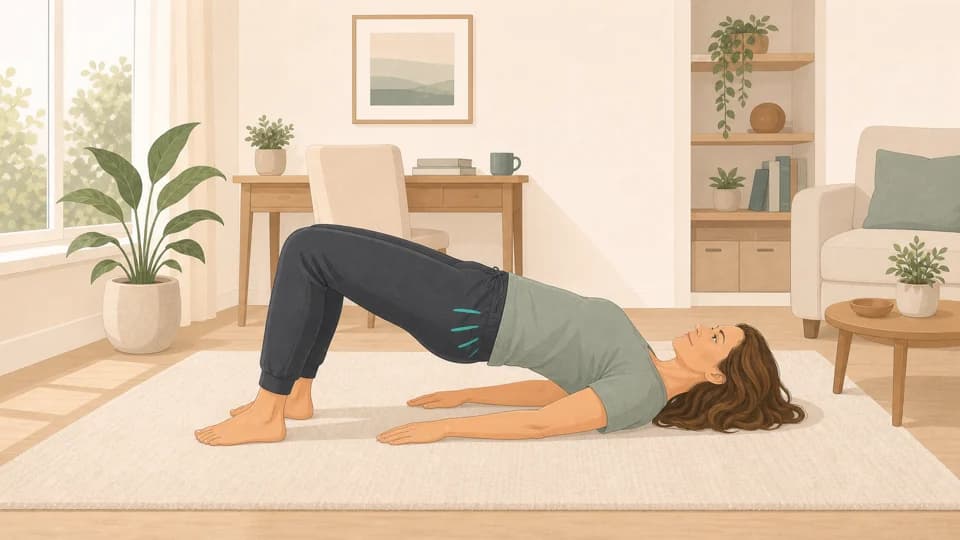
Why it hurts: Pain on the outside of the hip, sometimes down the side of the leg, often comes from the glutes switching off after hours of sitting and the outer hip taking the load. It's the spot people wrongly blame on "bursitis" when it's really weak, sleepy glutes.
The fix: Wake the glutes up before they have to work: a few glute bridges or seated squeezes before you stand. Strong glutes take pressure off the outer hip almost immediately.
Not sure which of the three is driving your hip pain?
Find your joint fix. Free 60-sec quiz →The One Habit That Helped Most
None of the three fixes worked when I did them once and forgot. What changed my hips was breaking up the sitting: a 30-second reset every time I got up, not a single workout. "Motion is lotion" is a cliché my PT repeats, but after a few weeks of doing it, the morning rust and the after-couch ache both faded.
Want the food half of the fix? Start here
Movement loosens the hip; food calms the inflammation around it. Get the free 1-page Anti-Inflammatory Grocery List (PDF): the joint-friendly foods I lean on, organized by aisle. No spam, unsubscribe anytime.
Keep reading
The Bottom Line
Hip pain when sitting after 50 is rarely "just aging." It's usually a tight front, a stiff deep joint, or sleepy glutes, and each one loosens with the right small habit. Find your spot, break up the sitting, and let your hip tell you what it needs. If you're not sure where to start, the quiz will point you to the right first step.
Not sure what's really driving your hip pain?
Take the 60-second quiz to find the fix that fits your hip.
Take the free joint quiz →Free · No email required · Results in 60 seconds
Keep reading

Medical disclaimer: This is my personal experience, not medical advice. Persistent, severe, or one-sided hip pain, or pain with swelling, fever, or after a fall, should be checked by a qualified professional.