


I stopped walking for six weeks to protect my knees. I was proud of it, honestly. When I finally described the plan to my physical therapist, she put it plainly: “You rested the one thing that was keeping the joint fed.”
Cartilage has no blood supply of its own. It gets what it needs from movement pressing fluid in and out of it. Six weeks of protection had made everything worse. Here are the 5 signals I now use to tell the difference between a walk that helps and one that costs me.
What this gives you
- ✓5 signals, each with a clear keep-going or stop verdict
- ✓The 24-hour rule that reads the walk after the fact
- ✓The two signs that are worth a professional opinion
Cartilage receives no direct blood supply. Nutrients reach it through the fluid that compression and release push across the joint surface. Complete rest does not spare a knee. It starves it.
The 24-Hour Rule
The single most useful thing she gave me. Judge a walk by how your knee feels the next morning, not during. Back to your normal baseline within 24 hours means the load was right, even if the walk itself was uncomfortable. Still worse the next day means it was too much. Same walk, two very different verdicts, and only one of them is visible while you are out there.
The 5 Signals
Two say keep going, one says adjust, two say stop. Screenshot this before your next walk.
🟢 Pain that fades in the first ten minutes
Verdict: Keep walking
Stiff joints often hurt most at the start and loosen as the fluid inside them warms up and spreads. If minute twelve feels better than minute two, the walk is doing its job.
🟢 Soreness that settles by the next morning
Verdict: Keep walking
A dull ache the same evening that is gone when you wake up is a load your knee handled. That is the zone where walking builds tolerance instead of eating into it.
🟡 Pain that climbs steadily as you go
Verdict: Shorten, do not stop
Rising pain usually means the distance is past your current ceiling, not that walking is wrong. Cut the route in half, keep the frequency, and add length back a few minutes at a time.
🔴 Swelling you can see hours later
Verdict: Stop and reassess
Visible puffiness around the kneecap in the evening is the joint reacting, not adapting. Back off the distance for a few days and let it settle before you rebuild.
🔴 Giving way, locking, or a sharp catch
Verdict: Stop and get it looked at
A knee that buckles or catches mid-step is a mechanical signal, not a conditioning one. This is the one item on the list that deserves a professional opinion rather than a plan.
A knee that locks, buckles or swells sharply after a short walk is not a training problem. Get it assessed before you build any plan on top of it.
What Changed for Me
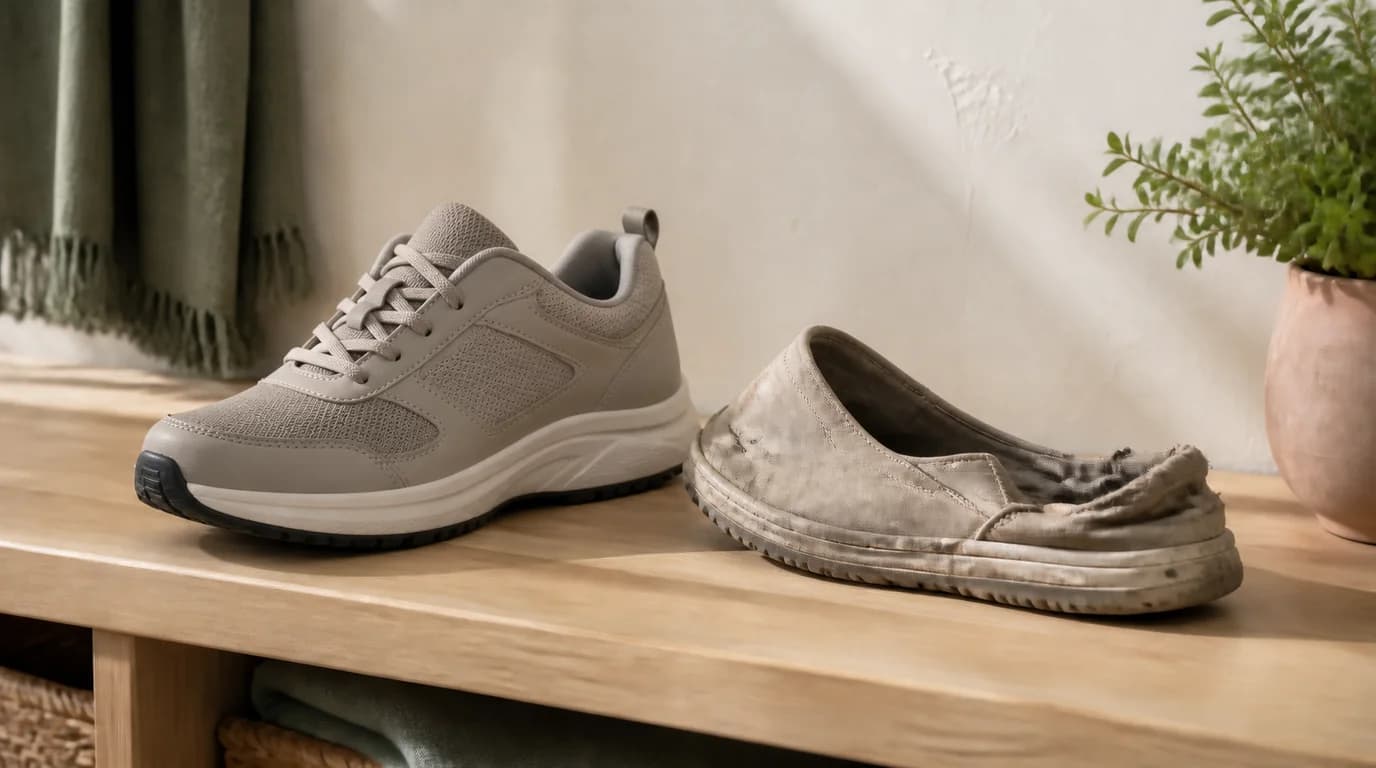
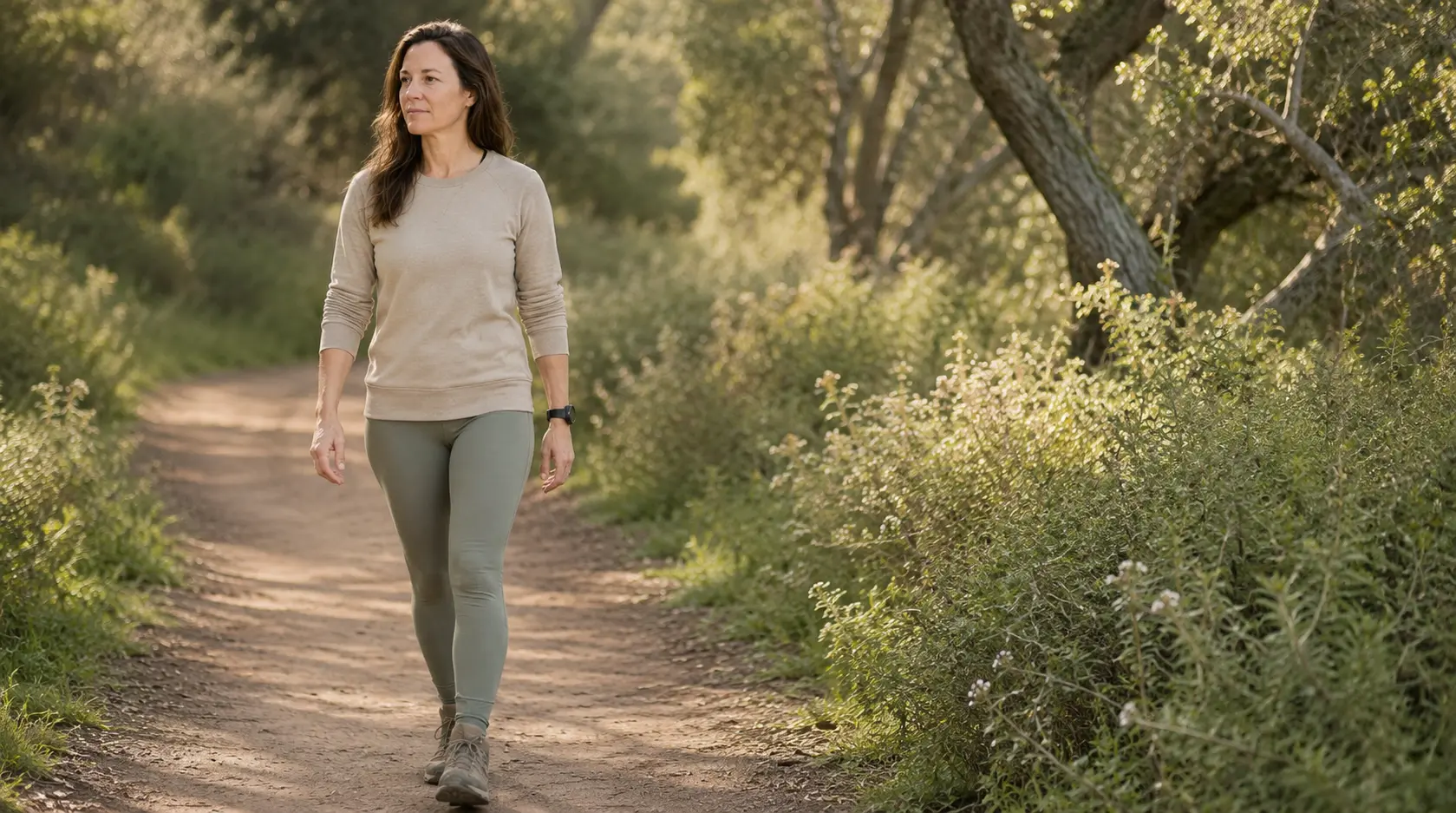
I went back to walking, but short and often instead of long and rare. Fifteen minutes, most days, on flat ground. Two things mattered more than the distance: fixing how I was landing and replacing shoes that were quietly working against me. Six weeks later the first ten minutes stopped hurting at all.
Not sure which of the 5 signals matches what your knee is actually doing?
Find your joint fix. Free 60-sec quiz →Walking is one half. Food is the other.
Get the 1-page Anti-Inflammatory Grocery List (PDF), organized by aisle, so the swelling side of the equation gets handled too. No spam, unsubscribe anytime.
The Bottom Line
Walking is usually the answer, at the right dose. Pain that eases as you go and settles by morning means keep going. Pain that climbs, swells or catches means shorten or stop. Let the next morning tell you which walk you took.
Should YOU be walking on that knee?
Take the free 60-second quiz to find your personalized starting point.
Take the free joint quiz →Free · No email required · Results in 60 seconds
Keep reading

Medical disclaimer: This is my personal experience, not medical advice. Talk to a qualified professional if your knee locks, gives way or swells, or before starting a new walking routine.