


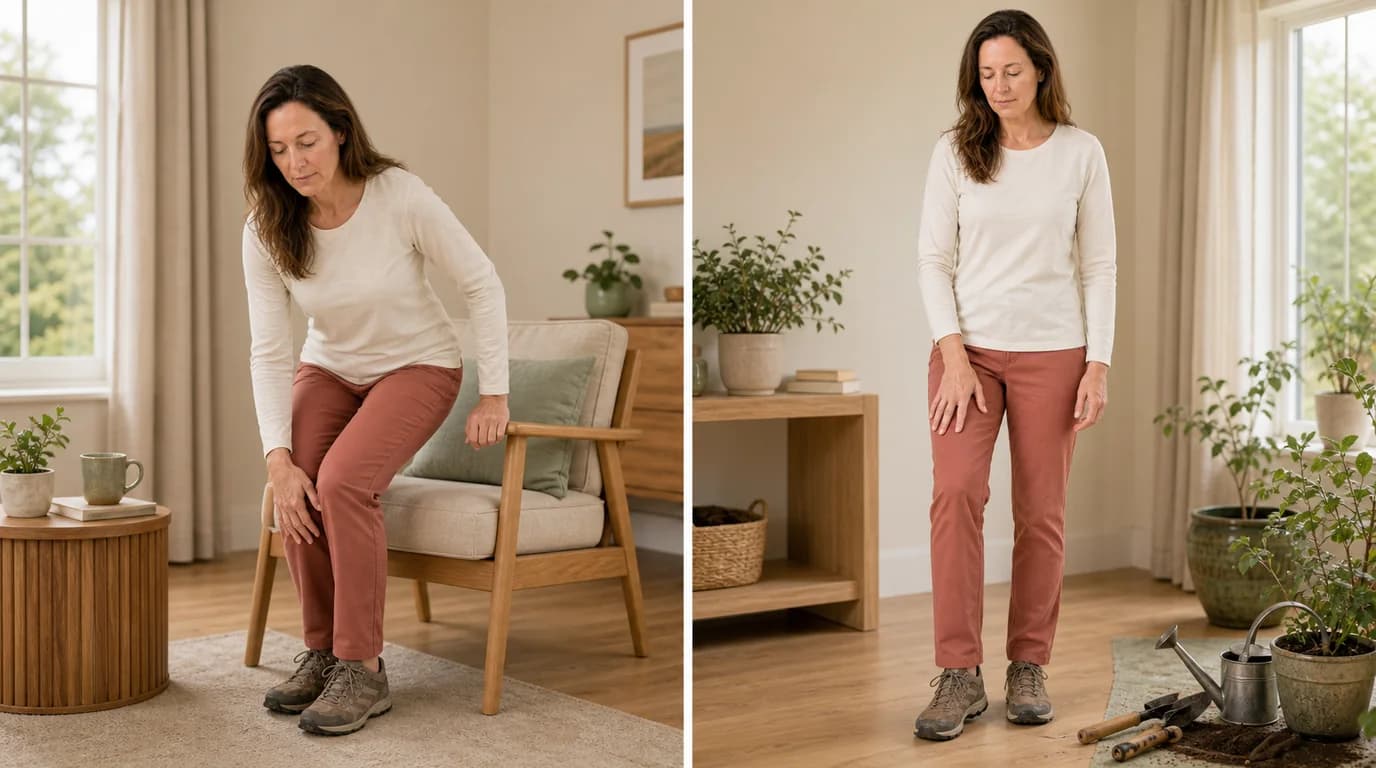
At 49 my hands ached in the morning, my knees grumbled on the stairs, and my shoulders felt like they belonged to someone twenty years older. I was convinced I'd woken up with arthritis overnight.
My rheumatologist listened, examined me, and said something I didn't expect: “Your joints are fine. This is your hormones talking.” She walked me through five signs that separate menopause joint pain from real arthritis, and knowing the difference completely changed what I did about it.
What you'll get clear on
- ✓5 plain signs that point to hormones, not arthritis
- ✓The one symptom that always means a doctor visit
- ✓Why the difference changes what actually helps
Estrogen helps keep cartilage and the joint lining healthy, which is why a sharp drop during menopause is linked to new aches. Reviews in Climacteric describe a distinct “musculoskeletal syndrome of menopause” affecting well over half of women in the transition.
5 Signs It's Menopause, Not Arthritis
None of these is a diagnosis on its own, but together they paint a clear picture. Screenshot this and check yours.
🌐 It shows up everywhere at once
Why: Arthritis usually settles into one or two specific joints. Hormonal joint pain tends to be migratory and all-over: knees, shoulders, hands, hips, often switching sides week to week.
How to check: Track where it hurts for a week. If the pain moves around instead of staying put, that points more to hormones than to joint-by-joint wear.
🌅 Morning stiffness that loosens fast
Why: With menopause, joints feel stiff on waking but ease within 20-30 minutes of moving. Inflammatory arthritis stiffness tends to last well over an hour and can return after sitting.
How to check: Time it. Note how long the stiffness lasts after you get up. Quick to loosen = a reassuring sign.
📆 It tracks with your cycle and other symptoms
Why: If the aches arrived alongside hot flashes, broken sleep, or irregular periods, your dropping estrogen is the common thread. Estrogen helps keep the joint lining calm.
How to check: Line up when the aches started against your other changes. Same time window? That is a strong clue.
🔥 No hot, red, swollen joint
Why: A joint that is visibly swollen, warm, and red, especially just one, is a flag for inflammatory arthritis, not typical menopausal aching.
How to check: Look and feel. Persistent heat, redness, or hard swelling in a single joint deserves a doctor's eyes, not a wait-and-see.
💪 Movement helps instead of hurting more
Why: Hormonal joints usually feel better with gentle, regular movement. Pain that sharply worsens with use, or that wakes you at night, leans more toward arthritis.
How to check: Notice your pattern after a walk. Looser and lighter is reassuring; sharply worse warrants checking.
Still not sure whether hormones, inflammation, or wear is driving YOUR joint pain?
Find your joint fix. Free 60-sec quiz →Calm the aches from the inside: free grocery list
When the aches are hormonal, lowering everyday inflammation helps a lot. Get the free 1-page Anti-Inflammatory Grocery List (PDF): joint-friendly foods, organized by aisle. No spam, unsubscribe anytime.
The Bottom Line
Menopause joint pain is real, common, and often mistaken for arthritis, but it usually moves around, loosens quickly in the morning, arrives with other hormonal changes, and improves with movement. A single hot, swollen, red joint is the exception: get that one checked. Knowing which battle you're fighting is what lets you fight it well.
Is it hormones, inflammation, or wear?
Take the free 60-second quiz. It reads your symptoms and history to give you a personalized starting point.
Take the free joint quiz →Free · No email required · Results in 60 seconds
Keep reading


Medical disclaimer: This is my personal experience, not medical advice. A single hot, swollen, or persistently painful joint should always be evaluated by a qualified professional.