


One stiff morning I told my physical therapist I would exercise as soon as I could face getting onto the floor. She smiled and said, “Then the floor is the wrong starting line.” She put five movements on a note and told me to do them before standing up.
The sequence takes about six minutes and works the ankles, thighs, knees and hips without asking for balance. I use a reasonably firm mattress and move slowly enough that I could stop at any point. Here is the exact order.
A no-standing start
- ✓Five bed-based moves for ankles, knees and hips
- ✓Clear repetitions and positions for each exercise
- ✓No bands, weights, floor transfers or rushed mornings
A 2023 meta-analysis of 12 randomized trials involving 1,442 people with knee osteoarthritis found that home exercise reduced pain and improved physical function. A bed routine is not a complete program, but it can make the first repeatable minutes much easier to start.
The 5-Move Bed Sequence
Lie on your back with a pillow supporting your head. Keep every motion comfortable.
🦶 Ankle pumps
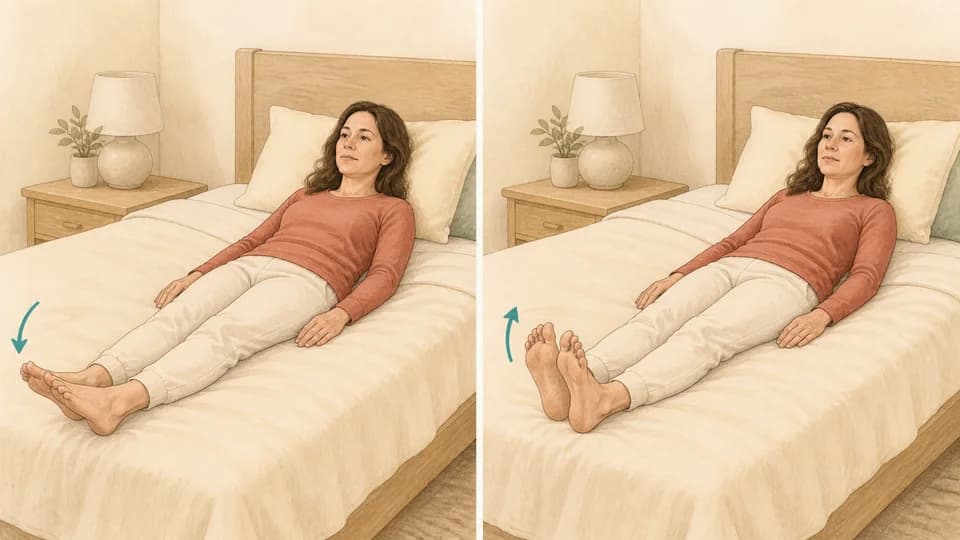
Why: The ankles and calves have barely moved overnight. Pumping them is an easy way to begin circulation and motion before the knees do any work.
How: Point both feet gently away, then draw the toes toward you. Move slowly for 20 repetitions and keep the knees relaxed.
🛝 Heel slides
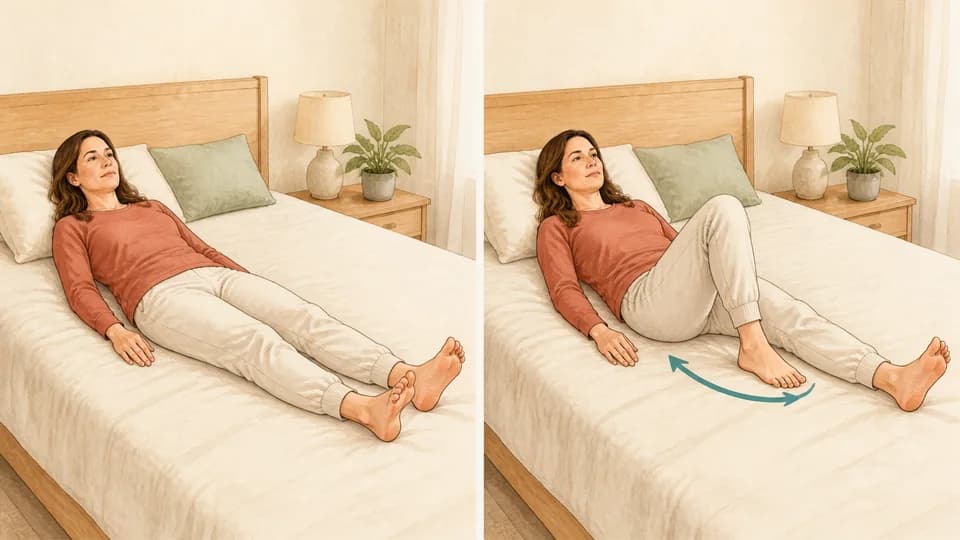
Why: Sliding the heel bends and straightens the knee while the bed supports the weight of the leg.
How: Slide one heel toward your bottom until you feel a comfortable bend, pause, then slide it long again. Do six to eight per side without letting the knee roll inward.
🦵 Quad presses
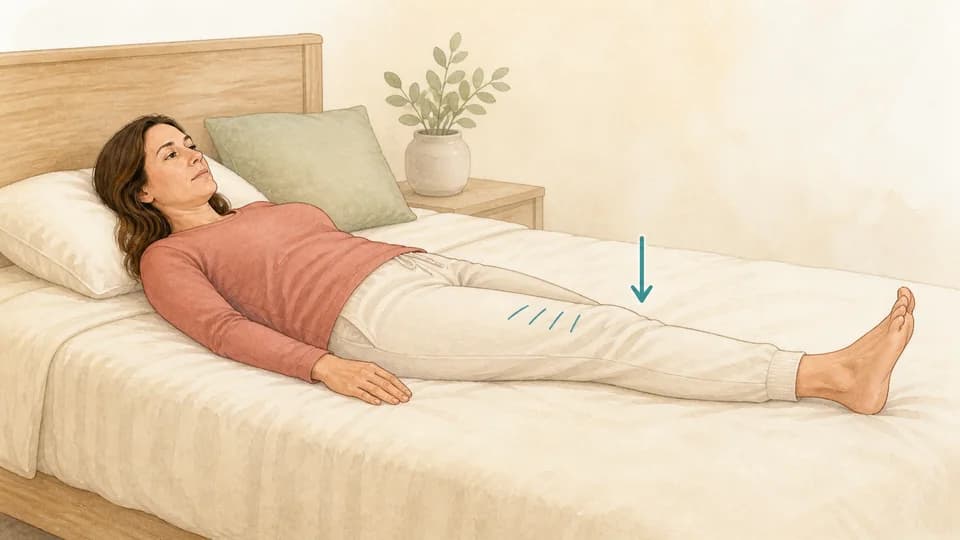
Why: The quadriceps support the knee. An isometric press wakes them up without requiring the joint to travel through a large range.
How: Keep one leg long, tighten the front thigh and gently press the back of the knee toward the mattress. Hold five seconds, release fully and repeat five times per side.
🍑 Glute squeezes
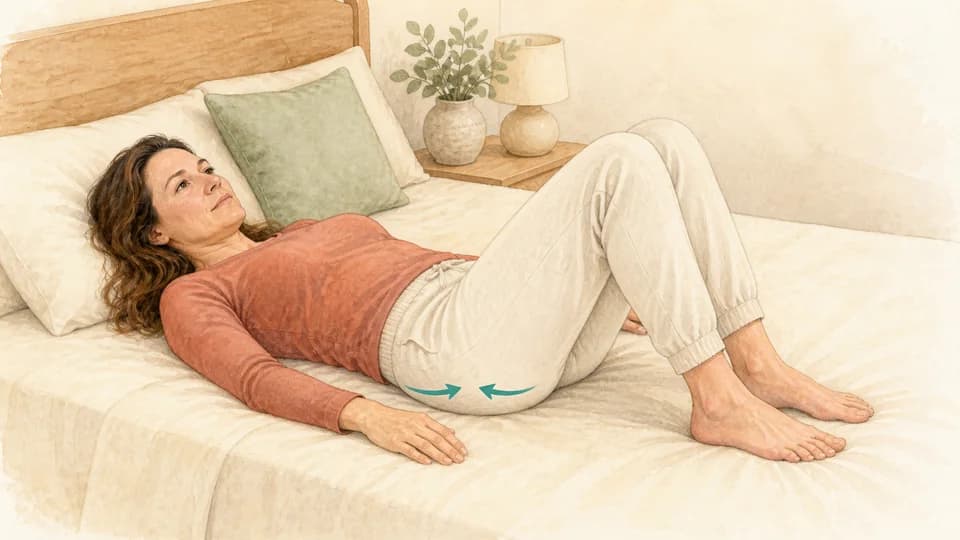
Why: The glutes help control the hips and knees when you stand. This is the lowest-friction way I know to remind them they have a morning job.
How: With both legs comfortable, squeeze both buttocks evenly for five seconds without holding your breath or arching your back. Relax and repeat eight times.
🚪 Bent-knee fallouts
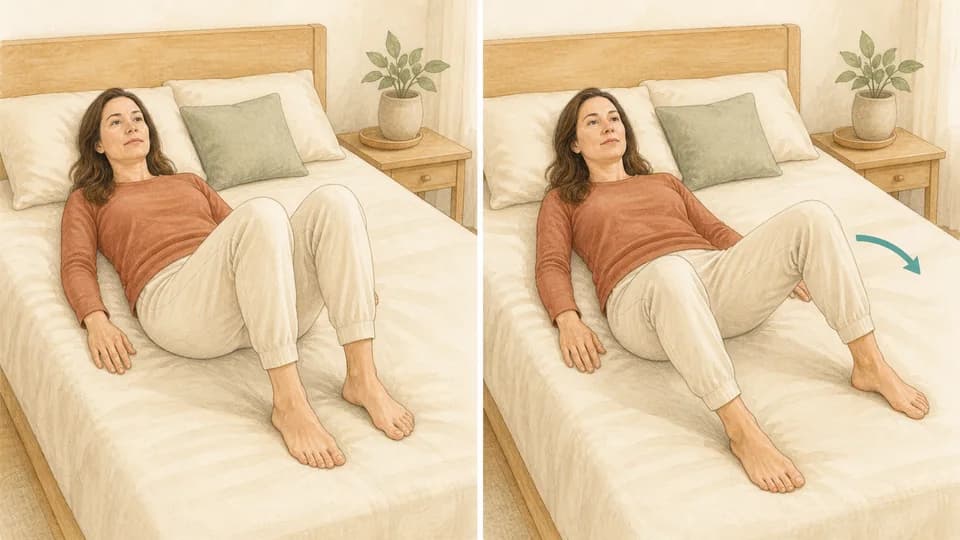
Why: This gentle hip-opening motion lets the hip rotate while the pelvis stays supported, which is useful before the first steps of the day.
How: Bend both knees with feet on the bed. Let one knee drift a few inches outward, keep the pelvis still, then return. Do six slow repetitions per side.
After the last repetition, I roll to my side, pause, then use my arms to sit up. The sequence should leave you feeling more prepared to stand, not exhausted. If the mattress is so soft that you sink or twist, use a firm couch or ask a PT for a better setup.
Stop and get individual guidance when needed
Stop for sharp or increasing pain, chest pain, severe dizziness, new numbness or weakness. After surgery, a fracture, a joint replacement or a recent injury, use only the exercises cleared by your own care team.
A gentle start helps, but the right routine depends on which joints and movements are limiting you.
Find your joint fix. Free 60-sec quiz →Pair your morning moves with smarter groceries
Get the free 1-page Anti-Inflammatory Grocery List, organized by aisle for easy joint-friendly meals. No spam, unsubscribe anytime.
The Bottom Line
The best starting position is the one you can actually reach. Pump the ankles, slide the heels, wake the thighs and glutes, then open each hip. Do one calm round tomorrow morning before deciding you are too stiff to move. Starting in bed still counts as starting.
Which joint should your morning routine focus on first?
Take the free 60-second quiz for a personalized starting point before you add more exercises.
Take the free joint quiz →Free · No email required · Results in 60 seconds
Keep reading



Medical disclaimer: This is my personal experience, not medical advice. Talk to a qualified health professional before starting new exercises, especially with recent surgery, injury or a diagnosed joint condition.