

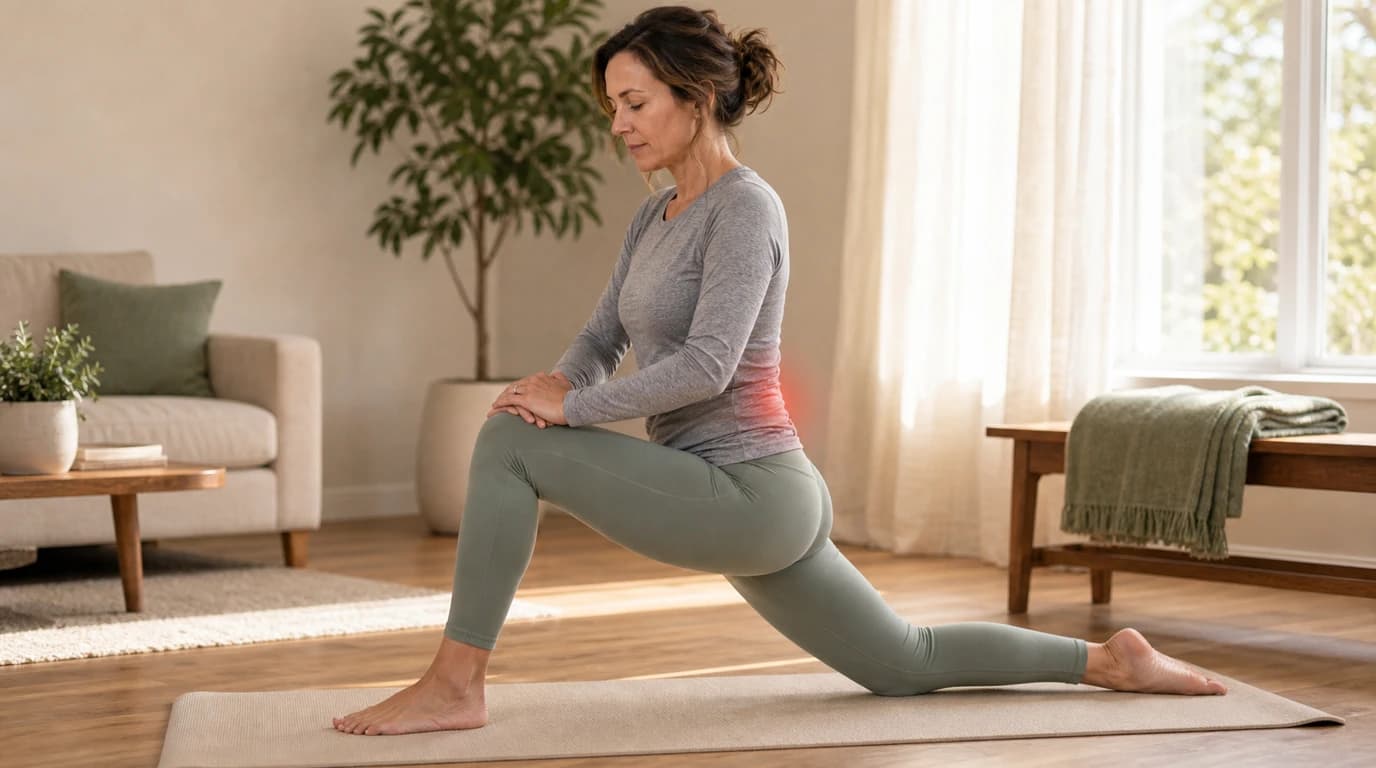
For almost a year, my lower back was the part of me I tiptoed around. A dull ache by mid-afternoon, a sharper grip when I stood up from the couch, the same tight strip across my lower back every morning. I tried everything back: heating pads, back stretches, posture correctors, a better office chair. Nothing held.
My physical therapist watched me do one movement, lie down and try to bring my knee to my chest, and said the thing that changed it for me: "Your back is screaming because your hips are mute. Stop treating the back. Treat the hips." She gave me four hip moves. Four weeks later, the ache was gone. Here's the hip-back connection most people miss after 50, and the exact routine that fixed mine.
What you'll get:
- ✓Why your lower back is often the symptom, not the cause
- ✓4 gentle hip moves that quietly fix lower back stiffness
- ✓Why both the front (flexors) AND the back (glutes) matter
Research published in Pain Medicinefound that the majority of non-specific lower back pain in adults 45+ is associated with tight hip flexors or weak glutes, not the spine itself. Address the hip and the back often calms down within weeks, without ever "treating" the back directly.
Why the Hip Is Usually the Real Driver
The pelvis is the bridge between your legs and your spine. When the muscles around it stop doing their job, the lower back gets recruited to keep you upright. Two things go wrong after 50:
The front of the hip gets tight from chairs and beds: the hip flexors shorten and tug the pelvis forward, which arches the lower back into a permanent low-grade strain. The back of the hip gets sleepy: the glutes, the biggest muscles in your body, stop firing properly, so the lower back has to do their job in every standing-up, lifting, and walking moment. Both problems land in the same place: the lower back.
The 4 Hip Moves That Fix the Back (In Order)
Open the front → wake the back → release the outer hip → integrate. Gentle, no equipment, about 4 minutes total. Stop any move that pinches the lower back.
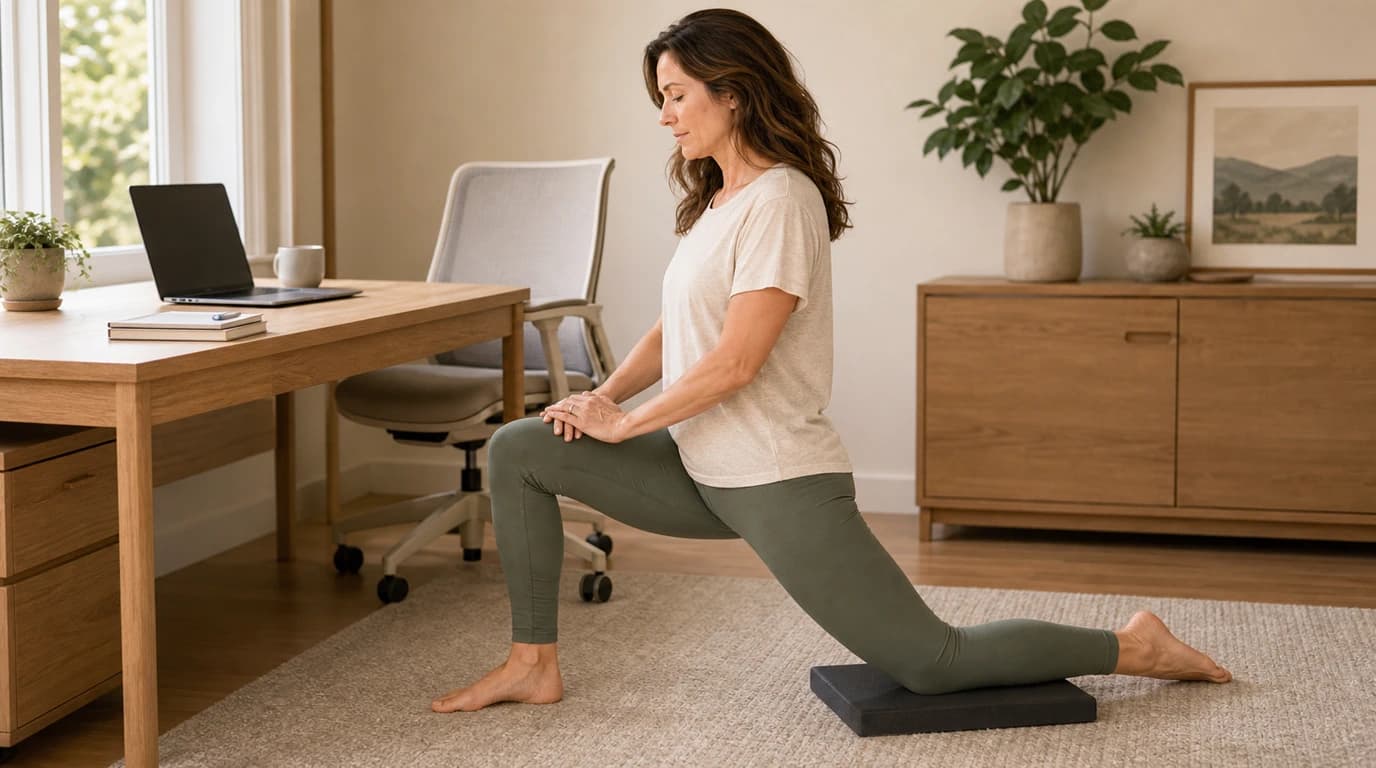
🧘 Half-Kneeling Hip Flexor Stretch
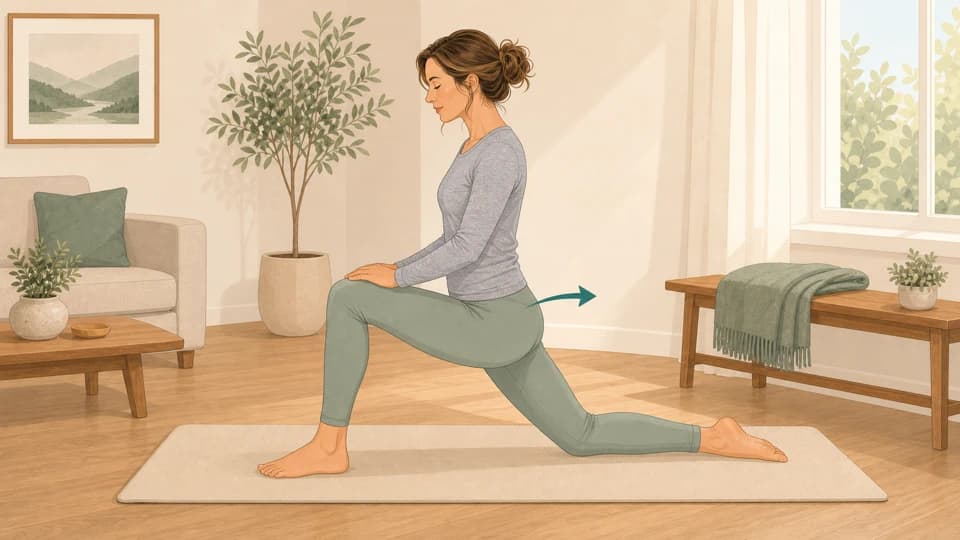
Why: Opens the front of the hip (the psoas) that tilts your pelvis forward and arches the lower back into a constant low-grade strain.
How: Kneel on one knee, the other foot flat in front, knee at 90°. Tuck the pelvis under (don't arch), then gently shift forward until you feel a stretch in the front of the back-leg hip. 30 seconds per side. Don't lunge deep: small range, no back arch.
🍑 Glute Bridge
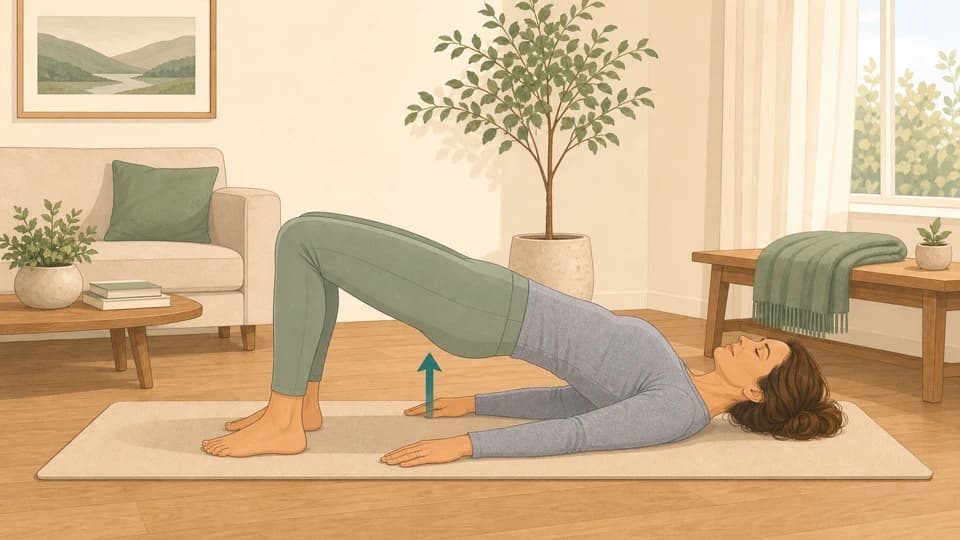
Why: Wakes up the glutes that stop pulling their weight after years of sitting, which forces the lower back to overwork in everything you do.
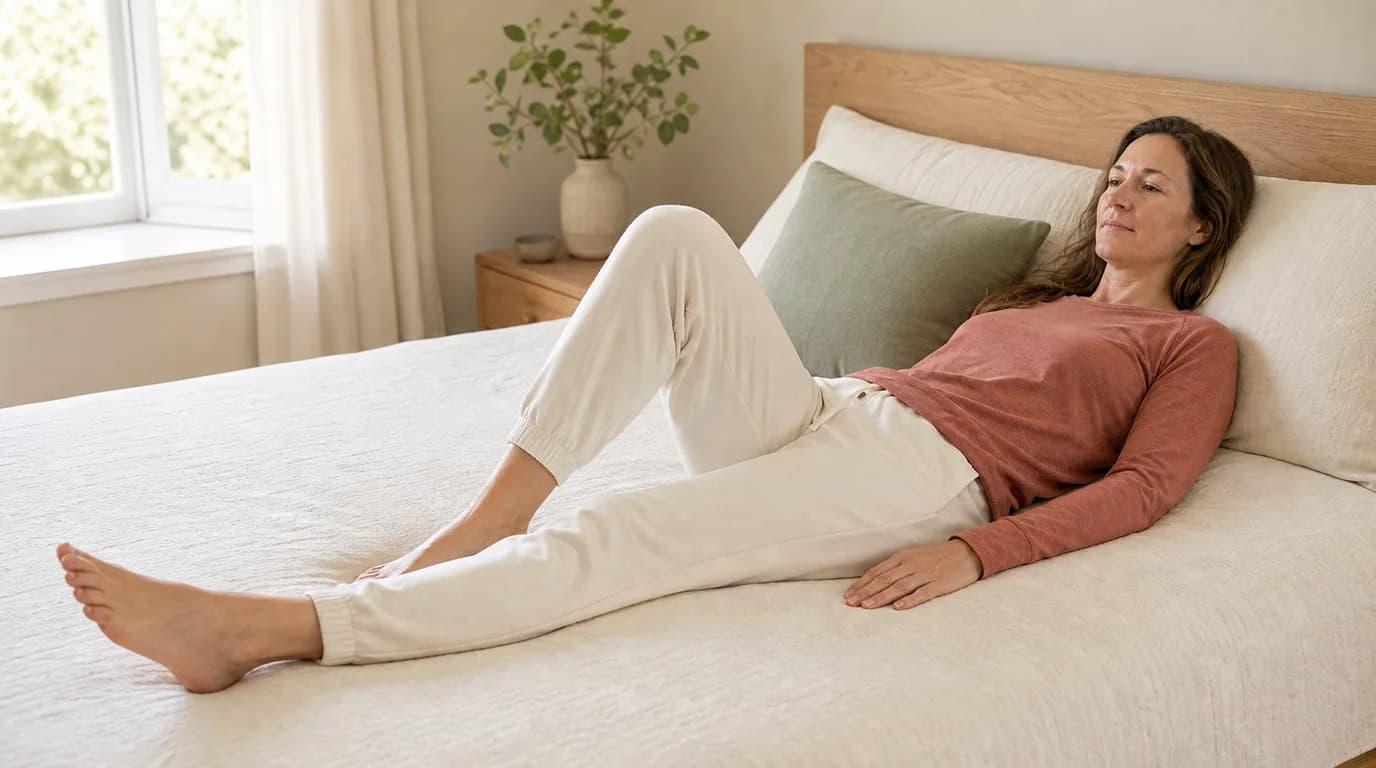
How: Lie on your back, knees bent, feet flat. Squeeze the glutes hard and lift your hips until knees, hips, and shoulders line up. Hold 2 seconds at the top, lower slowly. 10 reps. The lift comes from the glutes, not the lower back.
🦵 Standing Figure-4 Stretch
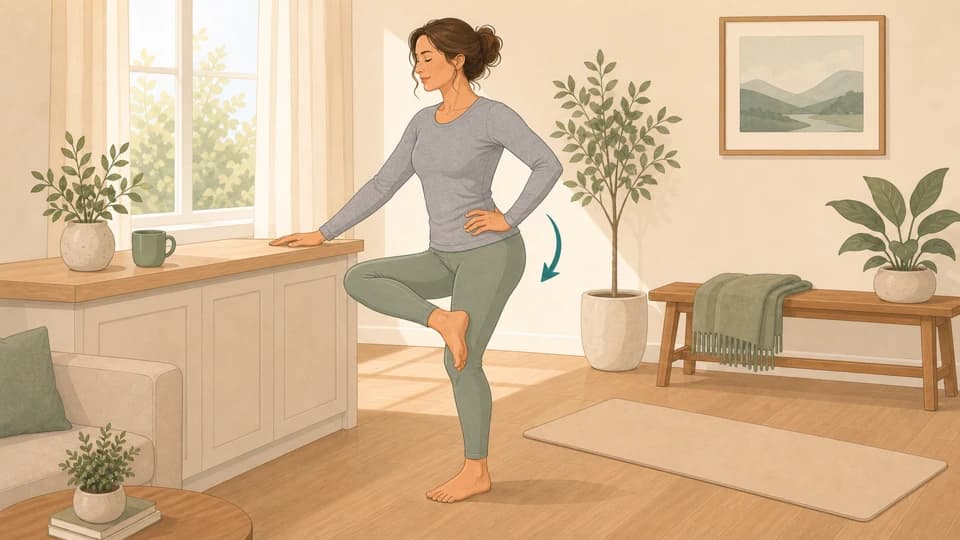
Why: Releases the piriformis and outer hip: the muscles that pinch the sciatic nerve and refer pain straight into the lower back and glute.
How: Stand tall, hand on a counter for balance. Cross one ankle over the opposite knee to make a "4," then sink your hips back like you're sitting into a low chair. 30 seconds per side. Keep the chest tall, hips back, not down.
🌀 Bird Dog (Modified)
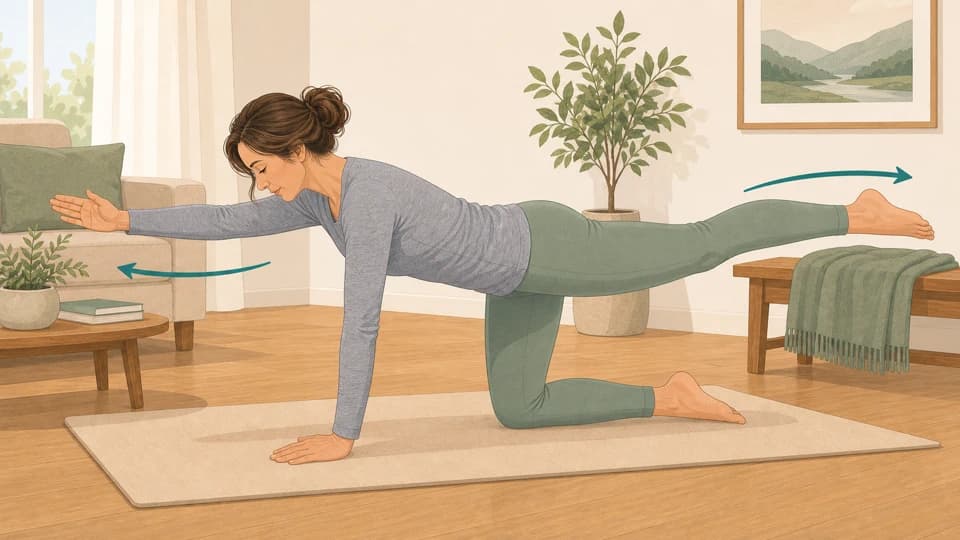
Why: Re-teaches the hip and the lower back to work together, instead of one compensating for the other, which is what creates the chronic ache.
How: On hands and knees, slowly extend one arm forward and the opposite leg back, only as far as you can keep your back flat. Hold 3 seconds, return, switch sides. 6 reps per side. Move slow. This is a control drill, not a stretch.
Not sure if your back pain is really a hip issue, or something else?
Find your joint fix. Free 60-sec quiz →When (and How Often) to Do It
Do the full four moves once a day, ideally at the same time, before your morning walk, on your lunch break, or before bed. The flexor stretch and the glute bridge can be added a second time on heavy desk days. Give it a real two weeks and let your standing-up-from-the-couch moment be the judge.
Calm the hip, calm the back, calm the inflammation
Hip mobility opens the joint; food keeps the inflammation around it down. Get the free 1-page Anti-Inflammatory Grocery List (PDF): joint-friendly foods organized by aisle. No spam, unsubscribe anytime.
Keep reading
The Bottom Line
If your lower back has been the loudest part of you and nothing back-focused has worked, look one floor down. Tight hip flexors and sleepy glutes are the quiet cause of most non-specific back pain after 50. Four hip moves, once a day, often do what a year of back stretches couldn't.
Want a routine matched to your specific pain pattern?
Take the 60-second quiz to find where to start.
Take the free joint quiz →Free · No email required · Results in 60 seconds
Keep reading
Medical disclaimer: This is my personal experience, not medical advice. Stop any move that causes sharp or worsening pain. See a qualified professional for back pain that is severe, radiates down a leg, follows an injury, or is paired with numbness, weakness, or loss of bladder/bowel control.