

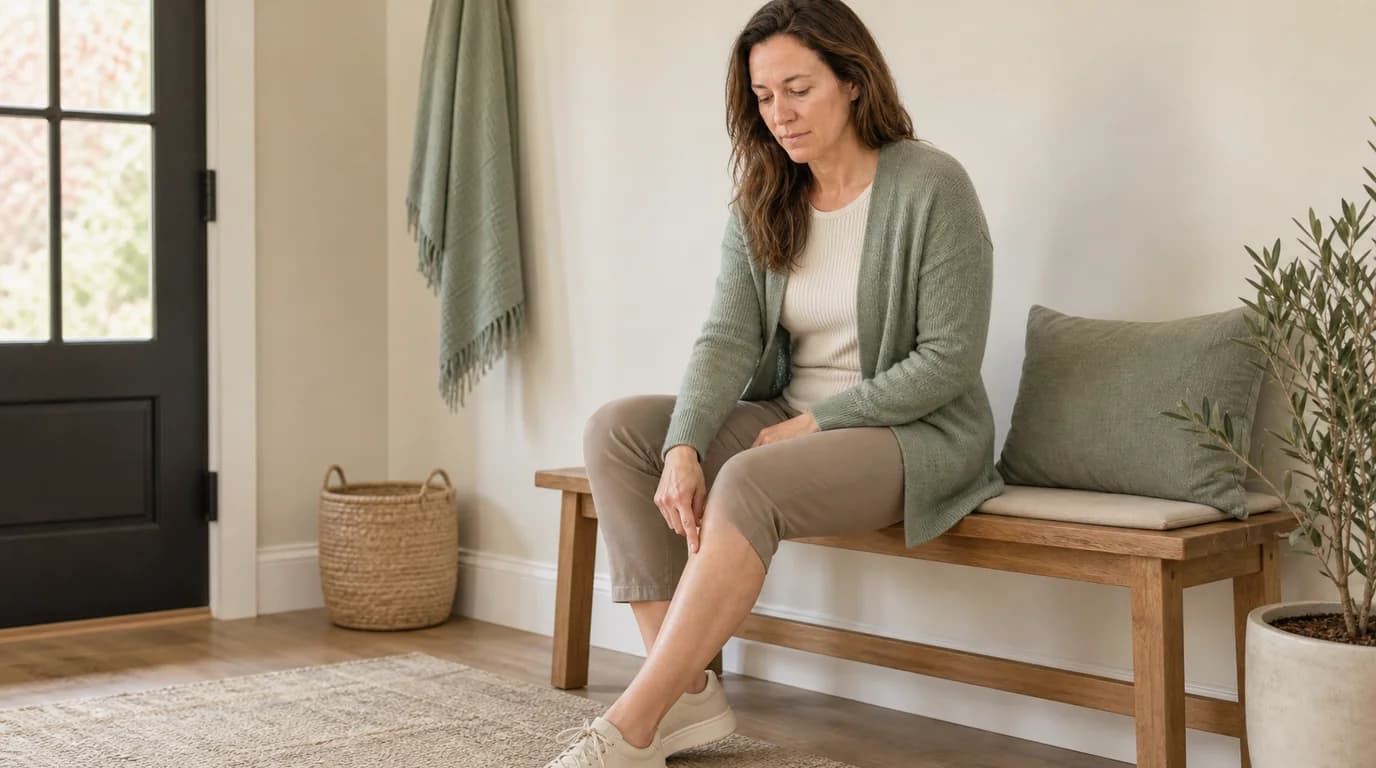
I kept saying “my inner knee hurts” until my physical therapist handed me a washable marker and said, “Show me the smallest possible spot.” I pointed at the joint line. She explained that two inches lower would suggest a very different irritated structure.
Location cannot diagnose a knee by itself, but location plus timing, swelling and mechanical symptoms can make the next step much clearer. These are four common inner-knee patterns and the clues worth writing down before an appointment.
A map, not a diagnosis
- ✓Four common inner-knee pain locations
- ✓The trigger and symptom clues that separate them
- ✓Urgent signs that should not wait for a home routine
In a New England Journal of Medicine study of 991 adults ages 50 to 90, MRI-detected meniscal damage ranged from 19% among women ages 50 to 59 to 56% among older men, and most tears were found in people without knee symptoms. A scan finding is not automatically the source of pain.
4 Inner-Knee Patterns to Notice
Use one finger to locate the pain, then add the trigger and behavior.
🦴 At the joint line: medial compartment irritation
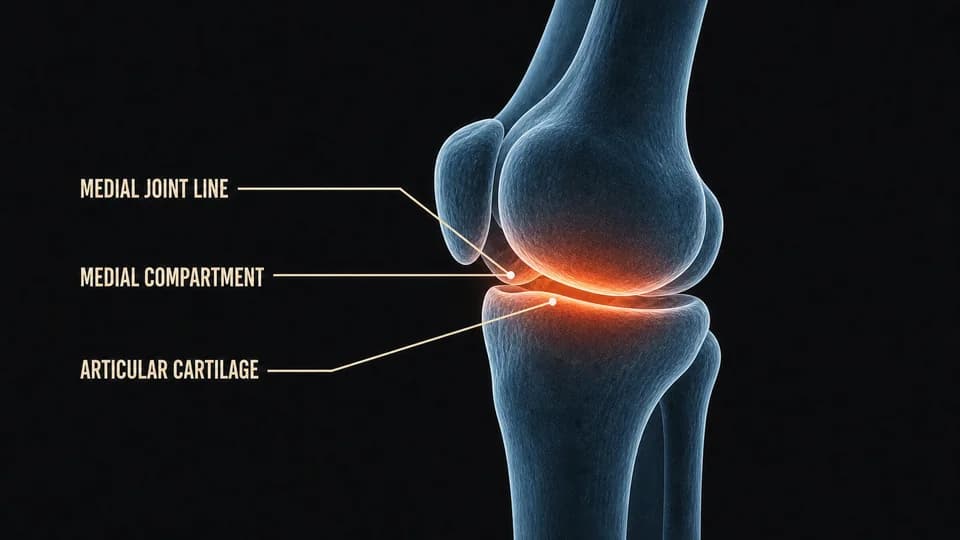
Why: Gradual pain directly along the inner joint line, often with short stiffness after rest and aching after a longer walk, can fit medial knee osteoarthritis.
How: Notice whether symptoms built slowly, ease after a few minutes of movement and return after load. A clinician can compare the history, exam and any imaging rather than relying on age alone.
↪️ At the joint line after a twist: medial meniscus
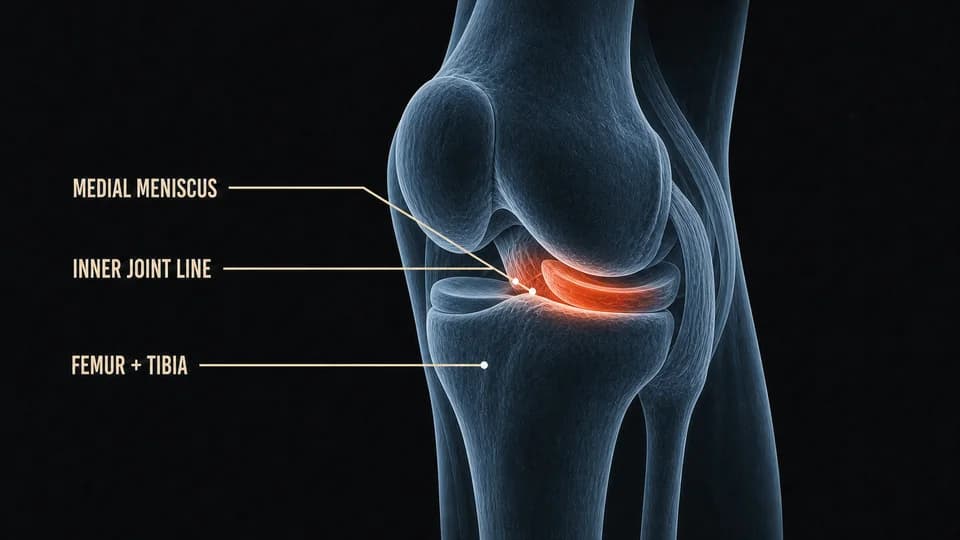
Why: The medial meniscus sits between the thigh and shin bones. A twist can irritate it, while age-related changes can appear without a memorable injury.
How: Record any twist, delayed swelling, catching, locking, painful clicking or trouble fully straightening. Do not repeatedly perform twisting self-tests to make the knee click.
👇 A few inches below the joint: pes anserine area
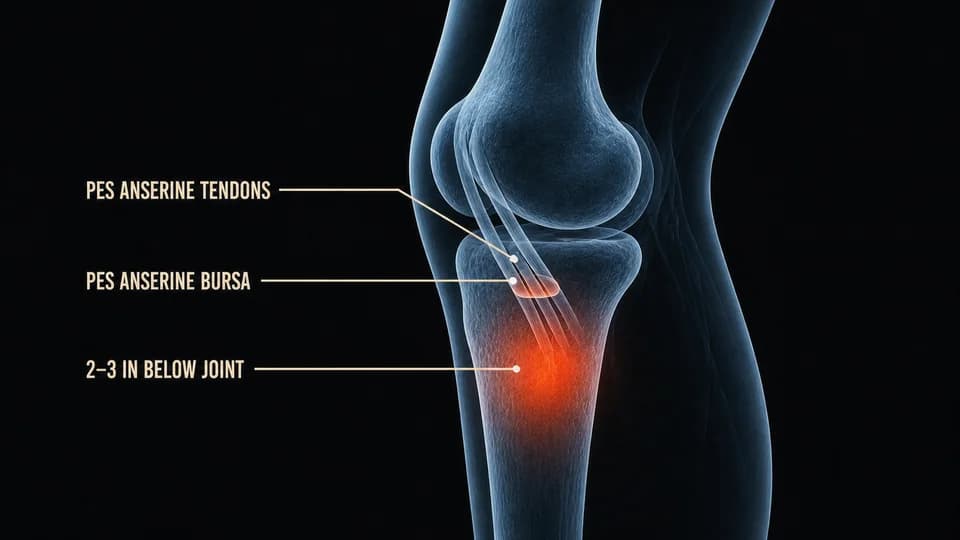
Why: A small bursa and several tendons meet on the inner shin below the knee. This area can become tender with overuse, hills, stairs or a sudden increase in walking.
How: Find out whether the most tender point is below, not inside, the joint line. Temporarily reduce the provoking load and ask a professional about strength, flexibility and training progression.
🛡️ Along the inner edge after a force: MCL
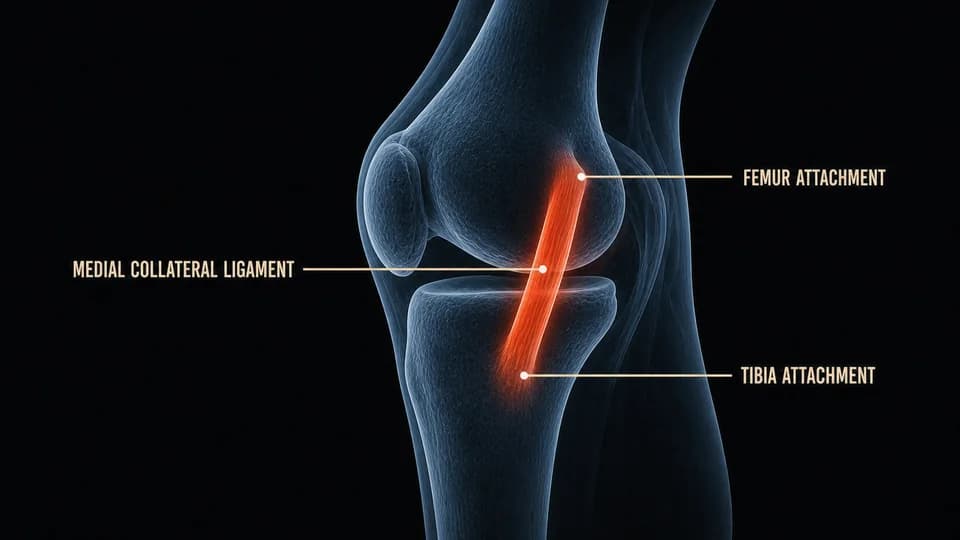
Why: The medial collateral ligament supports the inner knee against sideways force. Pain may follow a blow from the outside, awkward step or sudden change of direction.
How: Note the exact event, swelling and any feeling of instability. A new traumatic injury or a knee that gives way deserves an exam before you test stretches or return to long walks.
The question that helped me most was not “Which diagnosis sounds familiar?” It was “Where exactly, after what trigger, and what else happens?” Those three answers are far more useful than guessing from one symptom. Before an appointment, I also note what stairs, level walking, sitting and the first steps after rest do to the pain. That gives the clinician a pattern instead of a single snapshot.
Get urgent medical advice for these signs
Seek prompt care if you cannot bear weight, the knee is badly swollen or deformed, it locks and will not straighten, it repeatedly gives way, pain followed a major injury, or the joint is hot and red with fever or feeling unwell.
Turn the location clues into a clearer next step.
Your location, timing and triggers can help narrow the most useful next step.
Match my knee-pain pattern →Free · No email required · 6 quick questions
Support your knees with a simpler grocery list
Get the free 1-page Anti-Inflammatory Grocery List, organized by aisle for practical joint-friendly meals. No spam, unsubscribe anytime.
The Bottom Line
Inner-knee pain is a location, not a diagnosis. Joint-line pain that built slowly, joint-line pain after a twist, tenderness below the joint and pain after a sideways force each tell a different story. Mark the spot, record the trigger, note how it behaves over several days and watch for swelling, locking or instability before your next appointment. Avoid testing the painful movement over and over just to make the answer feel more certain.
Which pattern best matches your knee pain?
Take the free 60-second quiz to organize your symptoms and choose a safer starting point.
Show me my safest starting point →Free · No email required · Results in 60 seconds
Keep reading
Medical disclaimer: This is my personal experience, not medical advice. Talk to a qualified health professional for persistent inner-knee pain and before exercising after an injury.