

I used to treat anti-inflammatory eating like a collection of magic ingredients: a turmeric shot here, a handful of blueberries there, sprinkled on top of the same old dinners. My knees were not impressed.
Then a nutritionist reframed it for me. "Stop optimizing single foods. Inflammation responds to the pattern, and your pattern is decided at dinner." So we rebuilt my dinners instead: seven meals I actually like, on rotation, built from the same short grocery list. Within about a month, my evening knee puffiness had calmed down noticeably. Here's the exact rotation.
What you'll get
- ✓7 anti-inflammatory dinners that take 30 minutes or less
- ✓Why each one helps achy joints (the ingredient doing the work)
- ✓Shortcut versions for the nights you don't want to cook
Trials of Mediterranean-style eating consistently find the same thing: adults who switch their main meals to this pattern for 8 to 12 weeks report meaningfully less joint pain and stiffness than those on a standard Western diet. The effect comes from the repeated meals, not from any single superfood.
The 7 Meals on My Weekly Rotation
One per night, in any order. Every meal leans on at least one heavy-hitter: oily fish, olive oil, turmeric, ginger, leafy greens or beans.
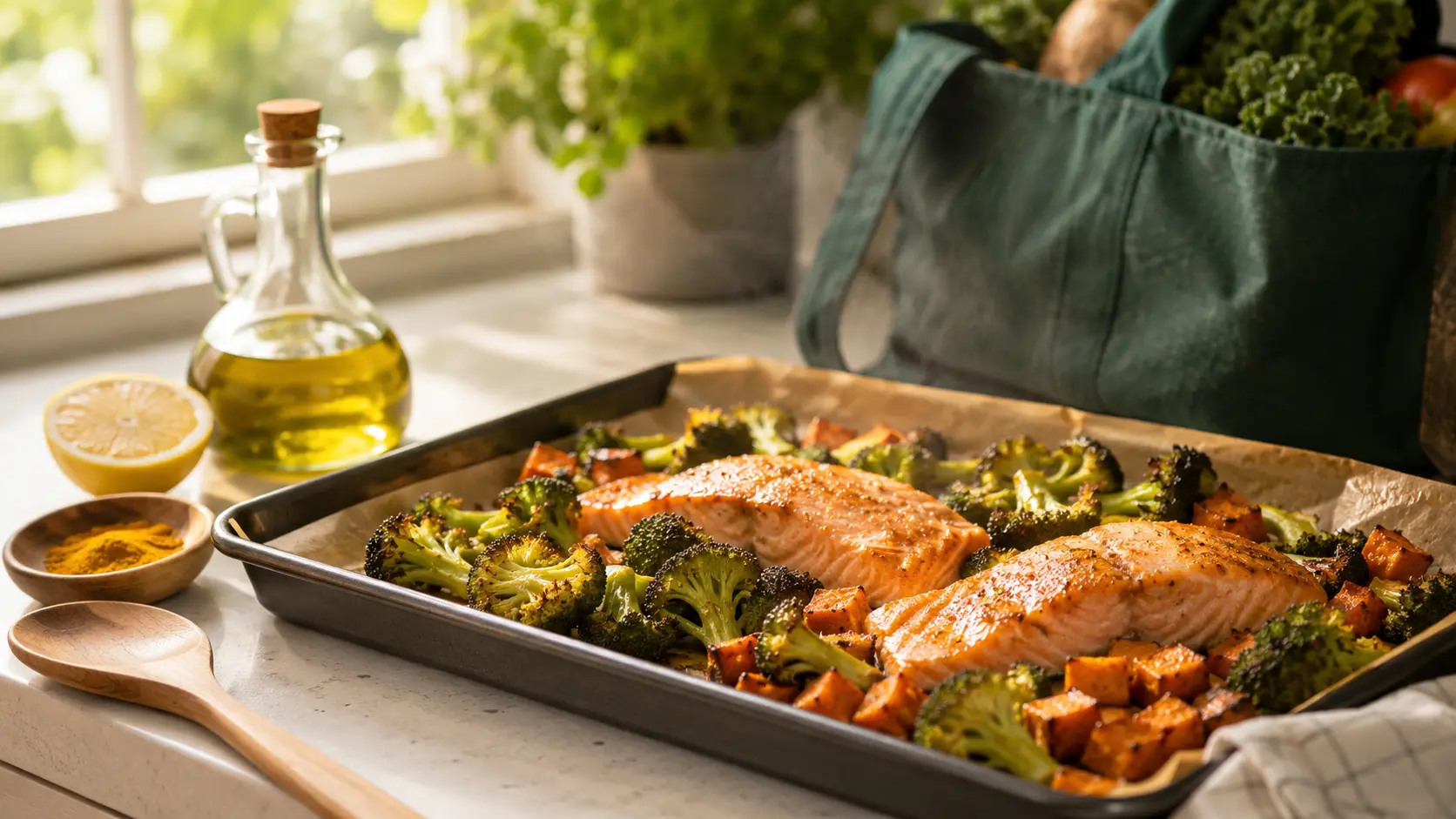
🐟 Sheet-Pan Salmon with Broccoli & Sweet Potato
Why it helps: Salmon is the single best dinner-plate source of omega-3s, the most studied nutrients for calming the low-grade inflammation behind joint aches. Broccoli adds sulforaphane, which works on the same pathways.
How I make it easy: One pan, 425°F, about 15 minutes. Toss everything in olive oil first. I make this every Monday so the week starts with an omega-3 hit, and leftovers become tomorrow's salad topper.
🍛 Turmeric Chicken & Rice Bowl
Why it helps: Turmeric's curcumin is a well-known natural anti-inflammatory, but it needs fat and black pepper to absorb. Building it into a warm dinner bowl solves both at once.
How I make it easy: Shortcut version: rotisserie chicken, microwave brown rice, and a sauce of yogurt, olive oil, half a teaspoon of turmeric and a good crack of black pepper. Ready in 10 minutes.
🥣 Mediterranean Lentil Soup
Why it helps: Lentils are loaded with the fiber that feeds gut bacteria, and a calmer gut means better-regulated inflammation everywhere, joints included. Onion, garlic and carrots add polyphenols for free.
How I make it easy: Make a big pot on the weekend: it tastes better on day two and freezes beautifully. A drizzle of extra-virgin olive oil on top at serving is where a lot of the benefit lives.
🍝 Olive Oil Pasta with Spinach & White Beans
Why it helps: Extra-virgin olive oil contains oleocanthal, a compound that works on the same pathway as over-the-counter pain relievers, gently and over time. Spinach and beans turn pasta night into a joint-friendly meal.
How I make it easy: Use whole-grain pasta, wilt in two big handfuls of spinach, add a rinsed can of white beans, and finish generously with olive oil, lemon and parmesan. About 20 minutes.
🍲 Slow-Cooker Chicken & Vegetable Stew
Why it helps: Chicken thighs simmered with carrots, onions, ginger and a spoon of turmeric make an easy one-pot dinner where the anti-inflammatory spices do their work without you tasting 'health food.'
How I make it easy: Load the slow cooker in the morning, dinner is done at 6pm. On stiff-hands days this is my zero-chopping fallback: frozen vegetable mixes work just fine.
🥘 Chickpea & Spinach Coconut Curry
Why it helps: Ginger and turmeric together are one of the best-studied spice pairs for joint comfort, and chickpeas bring plant protein plus the fiber your gut bacteria want.
How I make it easy: Everything comes from cans: chickpeas, coconut milk, tomatoes. Simmer with curry powder and fresh ginger for 25 minutes. It reheats so well I always double it.
🥗 Big Greek Salad with Grilled Salmon
Why it helps: This is the whole anti-inflammatory pattern on one plate: leafy greens, olive oil, olives, tomatoes and oily fish. Perfect for the nights when cooking feels like too much.
How I make it easy: Ten minutes of assembly. I use leftover salmon from meal one, or a can of wild salmon when the fridge is empty. Dress it with olive oil and lemon, never bottled dressing.
Not sure inflammation is what's driving YOUR joint pain? The 60-second quiz reads your symptoms and gives you a starting point.
Find your joint fix. Free 60-sec quiz →Get the grocery list behind these 7 meals (free PDF)
All seven dinners come from the same short shopping list. Get the free 1-page Anti-Inflammatory Grocery List (PDF), organized by aisle, so one shop covers the whole week. No spam, unsubscribe anytime.
The Bottom Line
You don't need a new diet, you need seven dinners you can cook on autopilot. Pick three from this list to start, put them on repeat, and let the pattern do the quiet work. Give it a month: your evening joints will tell you whether it's working long before any lab test would.
Is inflammation behind YOUR joint pain?
Take the free 60-second quiz. It reads your symptoms and history to give you a personalized starting point.
Take the free joint quiz →Free · No email required · Results in 60 seconds
Keep reading
Medical disclaimer: This is my personal experience, not medical advice. Talk to a qualified professional before making big dietary changes, especially if you take medication or have a health condition.