

Around 50, my joints started keeping score. Achy fingers in the morning, puffy knees by evening. I was about to spend a small fortune on supplements when a nutritionist stopped me.
“Before you buy anything, fix your grocery cart,” she said. “After menopause, inflammation climbs, and food is your steadiest lever.” She gave me seven everyday foods to lean on. Within a few weeks, my evening swelling was noticeably calmer.
What this list does
- ✓7 everyday foods that calm joint inflammation, no exotic items
- ✓Why they matter more for women after menopause
- ✓A free printable grocery list to take to the store
A review in Nutrients found that people who followed an anti-inflammatory, Mediterranean-style pattern for 8+ weeks reported meaningfully less joint pain and lower inflammatory markers than those eating a standard Western diet.
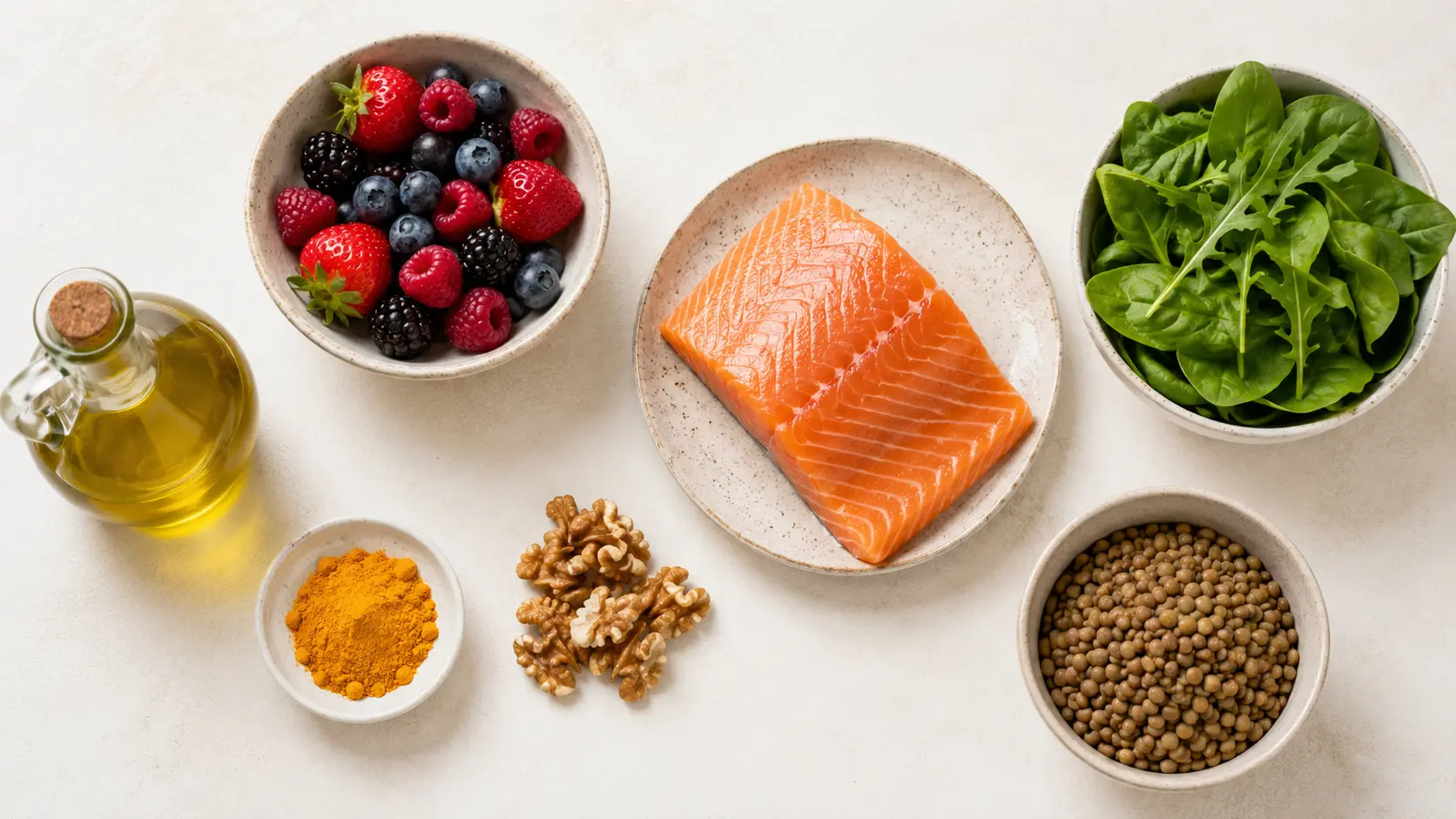
The 7 Foods I Eat Every Week
You don't need all seven every day. Build a few into your normal meals and let them add up. Screenshot the list for your next shop.
🐟 Fatty fish (salmon, sardines)
Why: The omega-3s in oily fish are among the best-studied nutrients for calming the inflammation behind joint aches.
How: Aim for two servings a week. Canned wild salmon or sardines count: quick, cheap, and no cooking skill required.
🫒 Extra-virgin olive oil
Why: It contains a natural compound that works on the same pathway as anti-inflammatory pain relievers, gently and over time.
How: Use it as your default fat: drizzled on vegetables, in dressings. Look for 'extra-virgin' and a dark bottle.
🫐 Berries
Why: The deep color comes from antioxidants that help quiet the inflammatory signals that ramp up after menopause.
How: A handful daily, fresh or frozen, in yogurt or oats. Frozen is just as good and lasts for weeks.
🥬 Leafy greens
Why: Spinach, kale, and chard are loaded with vitamin K and magnesium, both tied to healthier joints and bones after 50.
How: Toss a couple of handfuls into eggs, soups, or a smoothie. Cooked wilts down, so it's easy to eat more than you think.
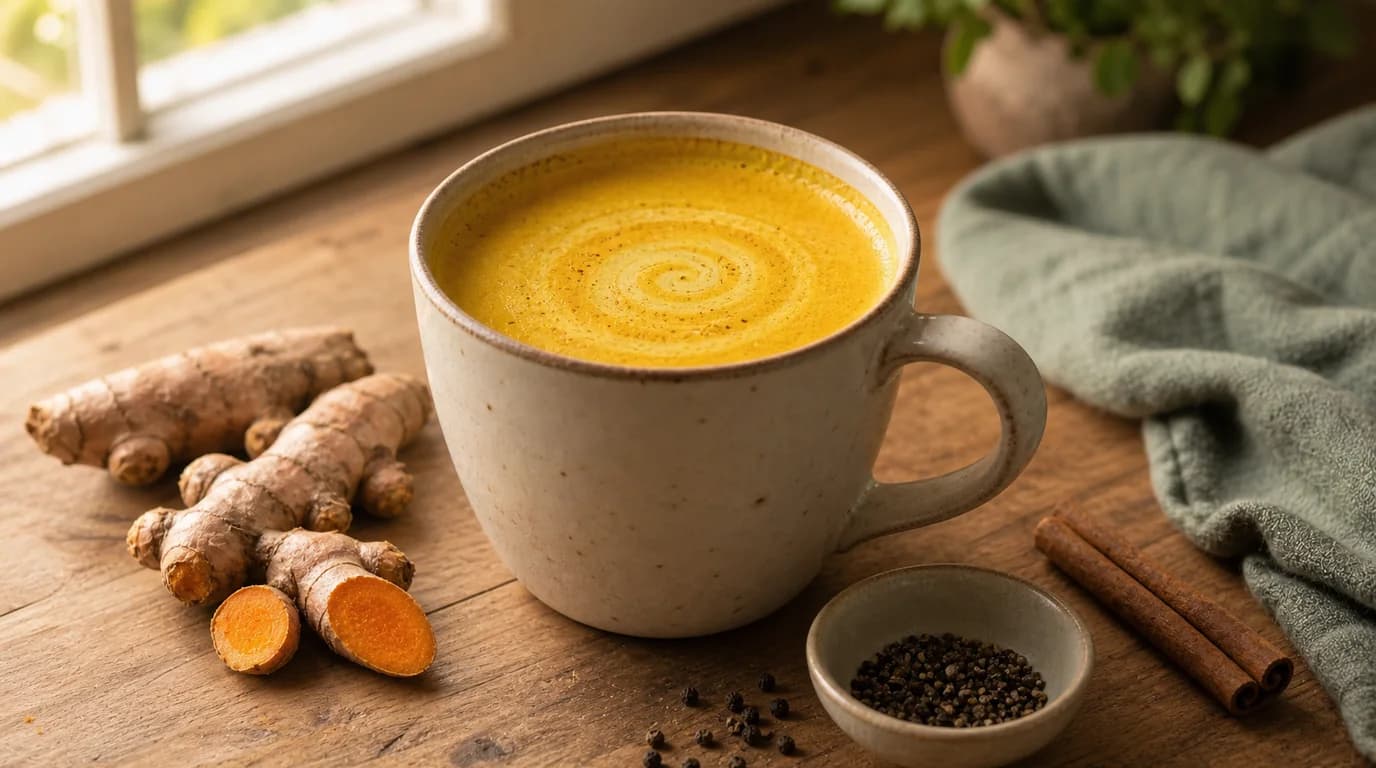
🟡 Turmeric (with black pepper)
Why: Its active compound, curcumin, is a well-known anti-inflammatory, but it's poorly absorbed on its own.
How: Add a pinch to soups, eggs, or warm milk, always with a crack of black pepper, which boosts absorption dramatically.
🌰 Nuts & seeds
Why: Walnuts, flax, and chia add plant omega-3s and fiber that help steady blood sugar, another driver of inflammation.
How: A small daily handful, or a spoon of ground flax in oats or yogurt. Keep them in the fridge so they stay fresh.
🫘 Beans & lentils
Why: High in fiber, they feed the gut bacteria that help regulate inflammation, and they're protein the joints quietly need.
How: Add a can of rinsed beans or lentils to soups and salads a few times a week. Easy, filling, and budget-friendly.
Wondering if inflammation is really the main driver of YOUR joint pain?
Find your joint fix. Free 60-sec quiz →Get the full anti-inflammatory grocery list (free PDF)
Want all of these on one page you can take to the store? Get the free 1-page Anti-Inflammatory Grocery List (PDF): joint-friendly foods for women over 50, organized by aisle. No spam, unsubscribe anytime.
The Bottom Line
After menopause, inflammation rises, and your grocery cart is the lever you control every single day. Fatty fish, olive oil, berries, leafy greens, turmeric, nuts and seeds, and beans do the quiet work. Pick a few, build them into meals you already eat, and give it a month. Your evening joints will tell you it's working.
Is inflammation behind YOUR joint pain?
Take the free 60-second quiz. It reads your symptoms and history to give you a personalized starting point.
Take the free joint quiz →Free · No email required · Results in 60 seconds
Keep reading
Medical disclaimer: This is my personal experience, not medical advice. Talk to a qualified professional before making big dietary changes, especially if you take medication or have a health condition.