

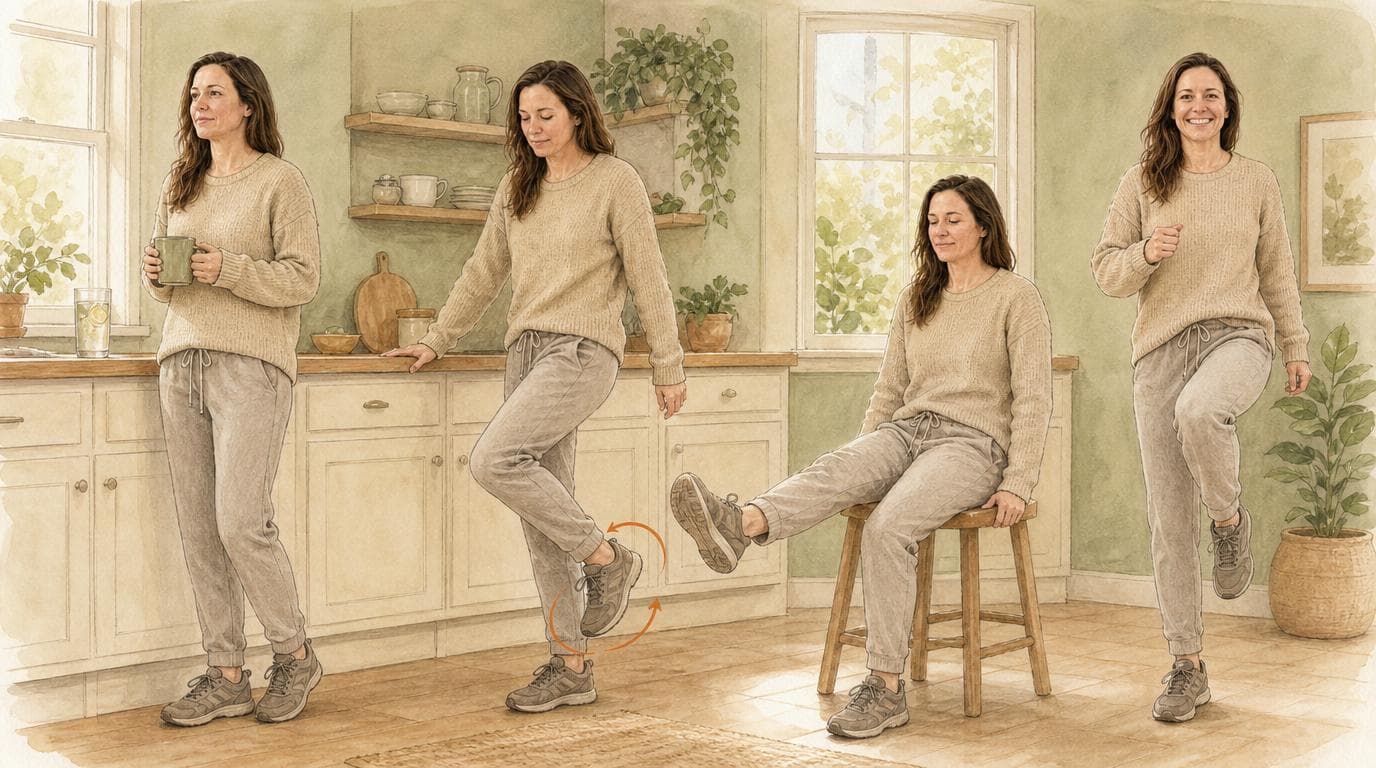
For years my morning was the same: alarm, shuffle to the kitchen, wince on the third step, and stand there waiting, not just for the coffee, but for my knees to stop feeling like they belonged to someone twenty years older.
Then my physical therapist asked one question: “What do you actually do for your joints before you ask them to carry you down the stairs?” The answer was nothing. She gave me a 4-step routine that takes under 5 minutes. No equipment, done in my pajamas while the coffee brews. My knees stopped complaining within two weeks.
What 5 minutes does for your joints
- ✓Less morning stiffness: no more wincing on the stairs
- ✓Re-lubricates ankles, knees & hips before they take your weight
- ✓Zero equipment, zero floor work: just you and the counter
Stiffness is just one of three main drivers of joint pain. Not sure it's yours?
Find your joint fix. Free 60-sec quiz →Synovial fluid, the natural oil inside your joints, turns thick and gel-like while you sleep. Gentle movement in the first 30 minutes of waking can cut morning stiffness by up to 40% by re-spreading that fluid. As one physio put it: motion is lotion.
The 4 Steps
Done in order, ground-up: hydrate, then ankles, knees, and full-body rhythm. Screenshot it and follow along.
🍋 Warm lemon water
1 min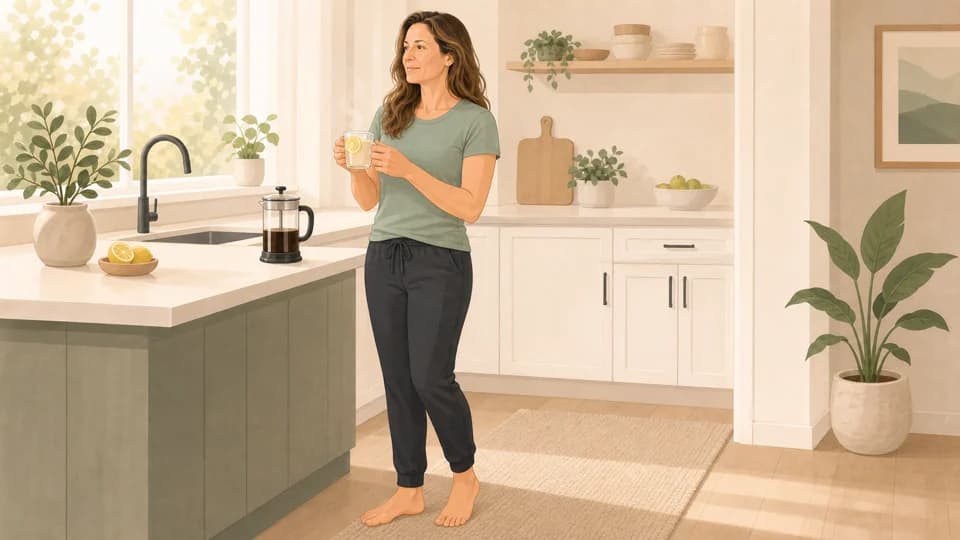
Why: After 8 hours dry, your joints are mildly dehydrated, and synovial fluid is 80% water. Warm water rehydrates it; the lemon adds collagen-building vitamin C.
How: Warm (not boiling) water + half a lemon. Sip it standing at the counter while the coffee brews.
🦶 10 ankle circles, each foot
1 min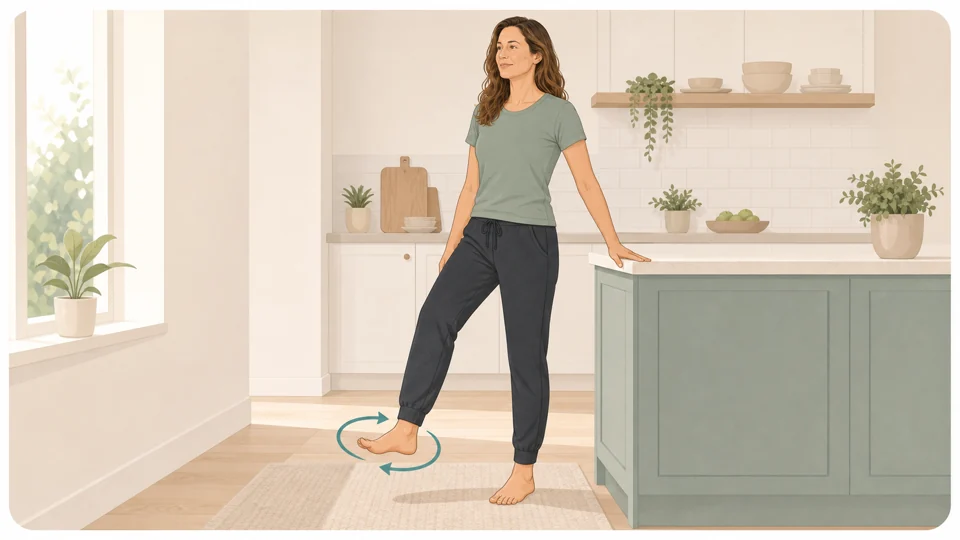
Why: Your ankles are the first joints to carry your weight, and they pump fluid back up your legs. Waking them first means they aren't stiff on the first step down the stairs.
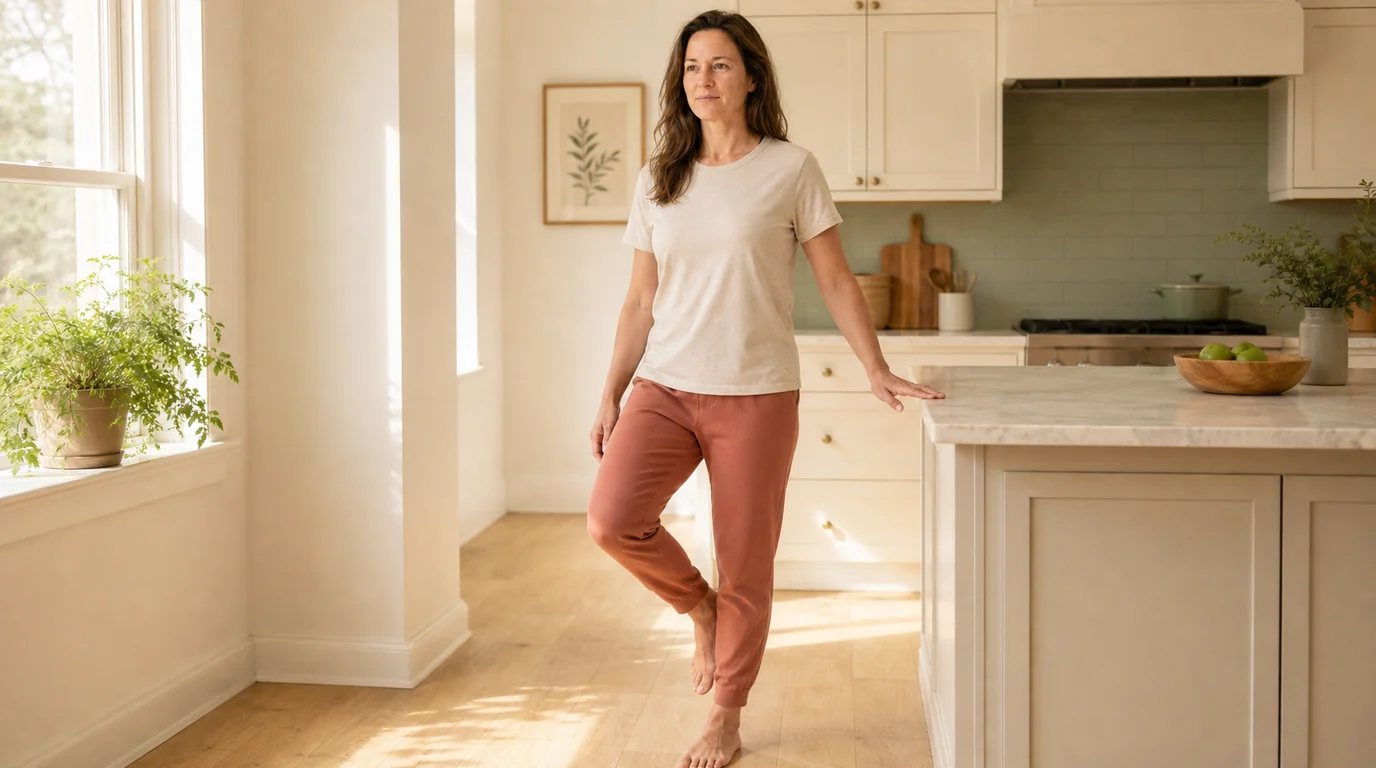
How: Hold the counter, lift one foot, circle 10× each direction, then switch. Slow and controlled.
🦵 5 gentle knee extensions
1-2 min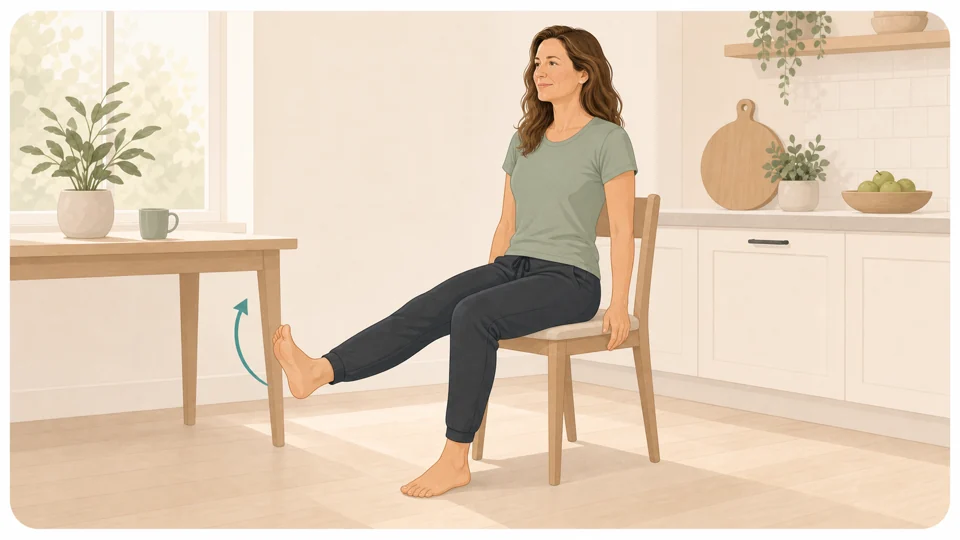
Why: Overnight, fluid pools instead of coating the whole knee. Slow extensions re-spread it across the joint and loosen the tight muscles that pull on the knee.
How: Sit, straighten one leg (not locked), hold 2 seconds, lower slowly. 5 reps each. Keep the range small. This is mobility, not strength.
👟 1 minute marching in place
1 min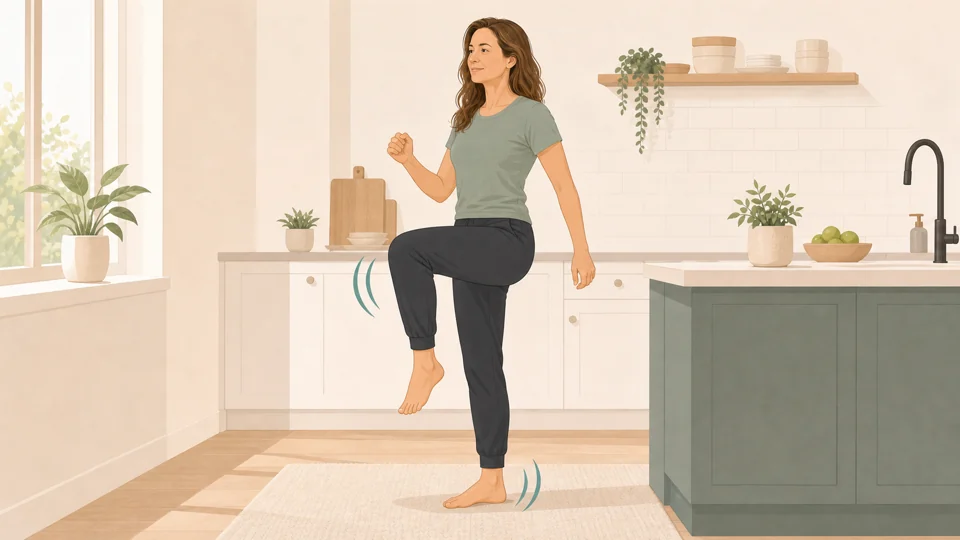
Why: Light, rhythmic loading remixes the synovial fluid, like shaking a bottle of salad dressing that's separated, and fires the calf pump that drives circulation.
How: Stand tall, knees up to hip height, heels landing softly, arms swinging. Keep it gentle, not cardio.
Pair the routine with the right foods (free list)
Movement re-spreads the fluid. Food helps keep it healthy. Get the free 1-page Anti-Inflammatory Grocery List (PDF) to stack nutrition on top of your morning routine. No spam, unsubscribe anytime.
The Bottom Line
Your joints often aren't stiff because you're overusing them. They're stiff because you're under-preparing them. Water, ankle circles, knee extensions, a minute of marching. Do it daily, imperfectly, for a month, and let your mornings tell you the rest.
Which joint needs your attention most?
Take the free 60-second quiz. It reads your specific symptoms and history to give you a personalized starting point.
Take the free joint quiz →Free · No email required · Results in 60 seconds
Keep reading


Medical disclaimer: This is my personal experience, not medical advice. Talk to a qualified professional before starting a new routine, especially with diagnosed joint conditions or recent injuries.